
Click here to return to Blog Post Intro
 Spiritual Leadership
Lead Like a Shepherd
Osborne explains, “I write about leadership and discipleship. My publishers think it creates ‘brand confusion.’ And they compare me to an author who writes cookbooks and mystery novels.”
He contends that leadership without discipleship is a waste of time. And discipleship without leadership is an idealistic pipe dream, a recipe for frustration and cynicism.
At the end of the day, Jesus didn’t call us to create great churches or impressive organizations. He called us to make disciples.
Leadership and discipleship matter. They are two sides of the same coin. When a church or ministry is saddled with dysfunctional leaders, outdated traditions, bad systems, or a flawed decision-making process, it will have a hard time making disciples. Church politics and infighting will suck up all the energy and focus that should be on the Great Commission.
It’s not so much about the task of leadership as it is about the heart of leadership and what it means to lead like a shepherd instead of a CEO.
Am I Qualified?
Consider the apostle Peter after he had denied Jesus Christ three times (as Jesus had predicted) prior to Jesus’ crucifixion. Following Jesus’ resurrection, Peter was distressed and mortified by his failure and hurt by the fact Jesus asked him three times, “Do you love me?”
Following the third time, Peter answered, “You know that I philia you.” Then Jesus—for a third time—reiterated his new assignment: “Feed my sheep.” Think about that for a moment. The arrogant disciple who had fallen the hardest and betrayed Jesus the most was not only reinstated to leadership but rather quickly reinstated at that.
If God only wanted perfect leaders with stellar résumés, he would have left a lot of stories out of the Bible. Peter’s is just one example. The privilege of spiritual leadership has never been reserved for those with a perfect track record. It’s been reserved for those who repent and run to the cross, no matter who they are or what they’ve done.
Jesus’ choice of his apostles was so confusing to the religious leaders of his day. He broke protocol. Rather than raising the bar, he lowered it. His apostles were a motley crew. That’s why the Pharisees, scholars, and other religious leaders had such a disdain for them. In their eyes, they didn’t measure up.
Inevitably, the first two qualifications they list as non-negotiables are education and experience. Have you seen character, anointing, and giftedness at the top of any list? Osborne explains, “Now don’t get me wrong. I’m not suggesting there shouldn’t be some minimum qualifications, but they need to be the right ones. Education and experience aren’t determiners of success. You don’t have to be a professional to be a significant leader in the kingdom of God.”
David probably wouldn’t make the cut. In most of our churches, someone with his rap sheet wouldn’t be allowed to serve as a pastor or even lead a Sunday school class. Yet God felt he was qualified to pen large chunks of Scripture after he’d committed adultery and murder. That creates an interesting conundrum. Would David ever be allowed to join a pastoral staff and preach in any of our churches?
We talk a lot about grace and mercy. We claim they’re both completely unmerited and impossible to earn. But when it comes to those who have stumbled and fallen, we tend to change our tune.
Repentance becomes a code word for earning their way back into the fold and restoration over a demanding path filled with hurdles we’ve designed to make sure they’re worthy of the grace and mercy they seek. And in some cases, we’ve actually made our standards for ministry and leadership more restrictive than God’s standards for writing Scripture.
No One Said It Would Be Easy
Within a relatively short time, Jesus and the Bible have gone from being widely honored (if only marginally followed), to grudgingly tolerated, to politically incorrect, to widely vilified as a repressive and dangerous threat. No one is immune. Not even Mother Teresa.
A big challenge for today’s spiritual leaders is a massive decrease in biblical literacy. Gone are the days when most non-Christians had a vague understanding of the biblical narrative.
Evangelism is no longer a matter of convincing people that the Jesus story is true. It’s now a matter of introducing them to a story they’ve never heard before.
A final challenge that makes spiritual leadership increasingly difficult today is the hyper privatization of spirituality. It’s widely believed that spirituality and our relationship with God is a purely private matter between us and God. All paths lead to the same place as long as we’re sincere.
Unfortunately, when “my truth” becomes more important than the truth, the Bible loses its objective authority. Tolerance used to mean “You have the right to be wrong.” But now it means “Everybody is right; so leave me alone.”
The Original Peter Principles
Peter chose to end his letter (1 Peter) with some final instructions for the leaders. Peter knew that the success and expansion of the gospel didn’t depend upon the ability to wield political power, gain cultural acceptance, or create great Christian institutions. It depended upon the success and health of the tiny house churches God had scattered throughout the region following the rise of the great persecution of the first century. He knew that a combination of godly leaders and growing disciples would enable the light of Jesus to shine into the darkest of places. And guess what? They pulled it off.
To the elders among you, I appeal as a fellow elder and a witness of Christ’s sufferings who also will share in the glory to be revealed: Be shepherds of God’s flock that is under your care, watching over them—not because you must, but because you are willing, as God wants you to be; not pursuing dishonest gain, but eager to serve; not lording it over those entrusted to you, but being examples to the flock. And when the Chief Shepherd appears, you will receive the crown of glory that will never fade away. (1 Peter 5:1–4)
Peter’s appeal into four simple, profound exhortations that can work for anyone anywhere when they take on the mantle of spiritual leadership. Those four exhortations are:
- Think like a shepherd.
- Serve with enthusiasm.
- Lead by example.
- Take the long view.
Think Like a Shepherd
It’s All About the Sheep
In Old Testament times, herding sheep was a dirty, boring job with crazy-long hours. In the family hierarchy, the task of shepherding the family herd almost always fell to the youngest and least distinguished son, which explains why Jesse didn’t even think of David when the prophet Samuel came to interview and anoint one of Jesse’s sons as the next king.
Shepherding was a low-paying, low-prestige, transient occupation filled by those on the fringes of society. And hirelings were notoriously undependable. They were known to bail at the first sign of trouble or danger. They were considered so untrustworthy they weren’t allowed to testify in a court of law.
Despite the low status of shepherds in ancient culture, the metaphor of leaders as shepherds was common in both pagan and Jewish literature. The shepherd metaphor portrayed kings and leaders as the primary source of care, concern, and protection for their subjects. It emphasized the people’s utter dependence on their kings, priests, and leaders, since sheep are notoriously incapable of fending or caring for themselves.
Jesus radically changed the shepherding paradigm. He didn’t just call himself the Good Shepherd, he also proclaimed that the mark of a good shepherd is his willingness to sacrifice his life for the sheep. In John 10:11-13, Jesus said, “I am the good shepherd. The good shepherd lays down his life for the sheep. The hired hand is not the shepherd and does not own the sheep. So when he sees the wolf coming, he abandons the sheep and runs away. Then the wolf attacks the flock and scatters it. The man runs away because he is a hired hand and cares nothing for the sheep.”
The shepherd asks, “What do the sheep need?” The hired hand asks, “What’s in it for me?”
The right question is always, “What do the sheep need?” It’s what a real shepherd asks.
How Do We Keep Score?
The problem with scorekeeping is not keeping score. It’s having the wrong goal.
The path to success in God’s kingdom has always been to give more than we get. Those who lose on their earthly scorecard inevitably win on God’s eternal scorecard. And that’s the only one that counts.
As Jesus put it in Matthew 19:28-29, “Truly I tell you, at the renewal of all things, when the Son of Man sits on his glorious throne, you who have followed me will also sit on twelve thrones, judging the twelve tribes of Israel. And everyone who has left houses or brothers or sisters or father or mother or wife or children or fields for my sake will receive a hundred times as much and will inherit eternal life.”

Willing to Be Misunderstood
Take a deep dive into Psalm 23, and discover some hidden gems and powerful insights that will be new to many modern-day readers but were blindingly obvious to Peter’s first-century readers.
The first thing to notice about how the Lord shepherds us is that he does what is best for us whether we like it or not.
He Makes Me Lie Down
Osborne observes that he always assumed the green pastures and quiet waters were symbols of God’s extravagant care. He imagined an idyllic setting and never noticed the words “makes me.”
Every shepherd has to occasionally make his sheep do something they don’t want to do. It’s an unpleasant but necessary part of leadership.
Osborne notes, “The longer I lead, the more convinced I am that it’s impossible to lead well if we aren’t willing to be misunderstood.”
To get sheep to higher elevations, they had to travel through narrow and dangerous valleys. Their ancient paths followed the same routes our highways do today. To get to the top you have to follow the contours of the valley.
Isn’t that exactly what the Lord does in our lives? He takes us where we need to go, not where we want to go. He leads us on the path of righteousness for his name’s sake, but it’s often a scary and dangerous path that makes us wonder what he’s up to or if he still cares about our well-being.
A good shepherd will put the need of the sheep first, even at the risk of being misunderstood and maligned. But he doesn’t enjoy it.
Adapting to Weakness
We must be willing to make our flock do the right thing even when they don’t want to do it. But the other side of the shepherding coin is just as important. It’s the willingness to patiently adapt and adjust to the fears and weaknesses of the flock, to meet them where they are, not where they ought to be.
A good shepherd adapts to the weaknesses and limitations of his flock even when those fears and limitations are unfounded and frustrating. He knows his job is to keep them healthy and hydrated, no matter what it takes to get the job done.
Many people in positions of spiritual leadership are far too impatient, idealistic, or lazy to do the kind of adapting and adjusting that a real shepherd like David did daily.
Adapting to Blind Spots
One of the most frustrating things a shepherd has to deal with are “cultural blind spots.” They’re essentially a form of group think, which is what makes them so hard to overcome. Once everyone believes something, most of us will go along with everyone, no matter what the facts are.
Most people today think that loving someone means strongly encouraging and affirming them in their choices, no matter what choices they make. It’s not our job to judge. It’s our job to love.
Thanks to our culture’s current definition of love—which mostly focuses on making sure nobody has a bad day—anything that calls for extreme or extended self-denial is written off as harsh, legalistic, unrealistic, and cruel. Many in our flocks have set aside significant portions of the Bible and the Gospels in their pursuit of being more loving and more like Jesus. And they see no irony in it. They’ve bought into the original lie of Satan: “Did God really say…?” (Gen. 3:1).
And they’ve decided he’s right; there’s no way a loving God could have said or expected that. It’s too difficult and painful to expect anyone to live that way.
The mad pursuit of maximized potential as the ultimate purpose in life is another modern-day cultural blind spot that most of us will have to deal with.
Parents who consistently skip church to maximize their child’s athletic prowess shouldn’t be surprised when he goes away to college and skips church to sleep in, catch up on homework, or anything else he considers to be important.
It’s a cultural blind spot. They’re blinded by our culture’s obsession with potential.
Adapting to Fear
Before we become too frustrated with those who can but won’t read their Bibles on a regular basis, we need to remember that there were rather few self-feeding Christians in the early church—or for the next fourteen centuries for that matter. It was pretty hard to read your Bible daily until a guy named Gutenberg came along.
So what’s a shepherd to do when the sheep only hunker down in a holy huddle?
One way Osborne’s church has approached this is by assigning community service projects to each small group. He asks them to carry out at least two service projects a year and has found that making something an assignment helps turn a good intention into an action item.
Then, his church follows up to find out what was done and see how things worked out. In other words, the church inspects what it expects. The truth is that lots of groups would never move from good intentions to action if they thought there would be no follow up. But since they know a check-in is coming, they make sure they’ve fulfilled their obligation.
That’s what a good shepherd does. He meets his sheep where they are and not where they should be.
Pursuing the Straggler
A good shepherd needs to be patient because sanctification is a process, not an instant decision. Some sheep will move to the front of the line quickly, some will move slowly, and some will be satisfied to stay in the middle of the pack. The frustrating ones will keep wandering off over and over again. It’s a shepherd’s job to care for them all. Shepherds can’t play favorites.
The Lord isn’t just patiently waiting for us to come around. He doggedly pursues his sheep. Even the bad ones. The Bible says he died for us while we were his enemies.
A good shepherd will do the same. He’ll pursue the straggler and wayward and care for the weakest and slowest, because that’s what a shepherd does.
The struggling, the stragglers, and the laggards need a shepherd, not a butcher. Because their story is never over until it’s over, the fact is that some of today’s worst sheep will become tomorrow’s best sheep. Some will become your fellow shepherds. We just never know which ones. Only God knows. And he’s not telling.
Flock Focused
Struggling sheep do battle with their sins and weaknesses. They need help.
Infectious sheep, however, have stopped struggling. They’ve given up the battle. They no longer fight their sinful impulses. They defend them. They need to be quarantined. Unfortunately, many shepherds are hesitant to remove or quarantine toxic and infectious sheep.
There are two main reasons why we hesitate or fail to remove and quarantine toxic and infectious sheep:
- We confuse love with looking the other way.
- We fear collateral damage.
Some leaders fail to quarantine their diseased and infectious sheep is fear of collateral damage. They know driving out the mocker, the divisive, and those who continue in high-handed sin is seldom pain free for either the sheep or the shepherd. So they put it off until later. Even the most toxic sheep have family and friends.
Make no mistake, the fear of collateral damage is a legitimate fear. But for those who want to shepherd well, it can’t become a paralyzing fear. The stakes are too high.
When a relationally toxic lamb (especially one in a leadership role) suggests their time is up, the right thing to do is to take their keys and put them in your pocket. And after they are securely in your pocket, pastor and love on them.
A good shepherd has the guts to do the right thing even when it’s a scary thing. He doesn’t stand by while the cancer spreads. He won’t let one sick lamb destroy the flock. He might fear collateral damage, but he’s not paralyzed by it. He knows that cancer kills in the long run. So he cuts it out before it spreads too far.
Serve With Enthusiasm
Be shepherds of God’s flock that is under your care, watching over them—not because you must, but because you are willing, as God wants you to be; not pursuing dishonest gain, but eager to serve. —1 Peter 5:2
Privileged to Serve
Over the years, Osborne has mentored and trained thousands of pastors and spiritual leaders. Most love what they do. But occasionally he encountered a leader or a pastor who longed to do something else. The thrill was gone. In some cases, it was never there. They shepherd and lead out of obligation. They’re beaten down, emotionally depleted, trapped in a role they wish they could abandon.
They need a break to step back, replenish, and refocus. But in some cases, the malaise continues. Nothing helps. Even after taking time away to refresh and refocus, they still find themselves leading out of a sense of obligation, begrudgingly instead of willingly and eagerly. At that point, Osborne suggests something that shocks them—he urges them to quit.
The idea of abandoning their leadership role strikes them as the ultimate spiritual capitulation.
Discipleship and leadership are two different things. Discipleship is a requirement for all; leadership is a calling for some. Not much has changed.
When leadership is seen as the endgame of discipleship, quitting is simply not an option.
We tend to apply Jesus’ call to servant leadership to everyone. But it wasn’t addressed to everyone. It was addressed to those who wanted to hold the highest positions of leadership in his kingdom:
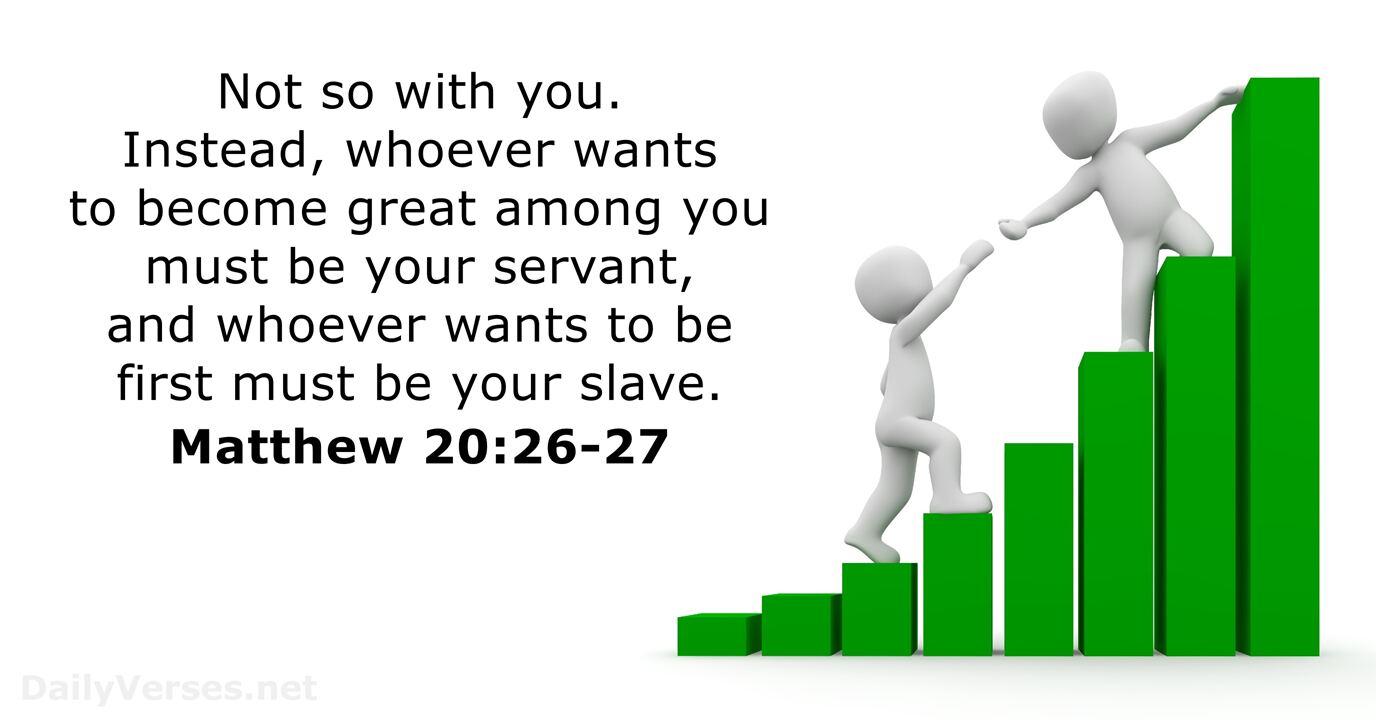
Unfortunately, when leadership becomes the preferred endgame for anyone who seriously pursues discipleship, we inevitably end up with leaders who serve out of obligation rather than calling, and that does a great disservice to both the begrudging shepherd and the flock.
Every Christian is called into ministry. It’s not something for a select few. The moment we step over the line and become a Jesus follower, we’re in the ministry. The only question is where we’re supposed to serve him.
Further, whenever ministry becomes something delegated to a select few highly committed Jesus followers who are supposedly “called” to serve Jesus on a “full-time” basis, it relegates everyone else to the sidelines. It undercuts the priesthood of believers, one of the most important doctrines in the New Testament.
Confusion, frustration, and seasons of discouragement are par for the course when it comes to leadership. There’s no need to bail out at the first sign of despair. Even Jesus hit the wall and asked for a reprieve. The apostle Paul was depressed. At one point he felt as though his burden was too great to bear.
The most telling difference between shepherds who are called and gifted to lead and those who serve out of guilt and obligation is their response to the failures, hardships, and discouragements of leadership. Those who have a genuine call also have a God-given passion for the task.
The No Complaining Rule
Check out my summary of Jon Gordon’s book entitled The No Complaining Rule.
No matter how tough things might get, complaining never makes things better. In the spiritual realm, it always makes them worse. The Bible is replete with examples of people who grumbled and paid a high price for it. Consider what happened to the Israelites as they left Egypt and headed for the promised land. Their grumbling and complaining didn’t fix anything. It never does.
We often seek to discover where God wants us to live or work. We tend to think that if we can find the right neighborhood or land the right job, everything will work out perfectly. But in most cases, God doesn’t care all that much. He’s far more concerned with how we live and work than where we live and work. But there is one aspect of God’s will he has made abundantly clear: he wants us to be thankful, no matter what the circumstances.

We need to be thankful in all things. But that doesn’t mean we have to be thankful for all things. Otherwise, prayer makes no sense.
It’s one thing to complain to God and it’s another to grumble and complain about God and the task or situation he’s called or placed us into.
Lead By Example
Not lording it over those entrusted to you, but being examples to the flock. —1 Peter 5:3
Servant Leaders
Jesus not only rejects all forms of leadership that depend upon fear, intimidation, or strict protocol, but presents himself as the perfect example of a new kind of leader, the servant leader. Jesus was the quintessential servant leader. But no one would call him soft. He said and demanded hard things, sometimes rather gruffly.
The idea that he was everybody’s best friend is a romanticized and idealized myth that has no grounding in Scripture. The religious establishment considered him to be rude and condescending. They felt threatened. That’s one of the reasons they turned on him.
Servant leaders are dialed in on what’s best for the people they lead, not for themselves.
Insecurity is the greatest hindrance to servant leadership. Insecure leaders can’t humbly serve others because anything that fails to support their power and status picks at the scab of their self-doubt.
Secure leaders, on the other hand, are comfortable in their own skin. They know who they are without the need to constantly remind everyone else who’s boss. They find their identity in Jesus, not the praise of others.
Love and faithfulness keep a king safe; through love his throne is made secure. – Proverbs 20:28
It’s a rather simple recipe: put the needs and interests of others above your own and keep your promises.
Shepherds and Cowboys
The apostle Paul wasn’t shy about telling his flock what to do. He summed up his leadership style in one simple command: “Follow my example, as I follow the example of Christ” (1 Corinthians 11:1). The apostle Peter also emphasized the importance of leading by example when he commanded those of us who shepherd God’s flock not to lord it over those entrusted to us but to be an example to the flock.
The cowboy is an American icon, romanticized in literature and cinema. He sits tall in the saddle, a man of few words, oozing testosterone and confidence. He’s not to be messed with by man or beast. Shepherds? Not so much. Can you think of a single movie or novel glamorizing a shepherd’s life? As we’ve seen, they’ve long been considered social outcasts and losers.
Yet despite their lowly status, the Bible consistently portrays them as the ideal metaphor for spiritual leadership. The Lord himself is portrayed as our Great Shepherd. David and Moses were tasked with shepherding God’s flock.
Here are three major areas where the leadership style of a shepherd is radically different from a cowboy.
- Relationship Based: A shepherd leads his sheep. A cowboy drives his cattle. Sheep know the shepherd’s voice. To be fair, fear-based leadership is a model that works well in the short run. It produces high levels of compliance and performance—as long as the leader remains strong and powerful.
- A Measured Pace: A cowboy’s pace is frenzied and chaotic. A shepherd walks his flock to its destination. There’s no rush. Even his sheep dogs are bred and trained to be forceful but gentle. The goal is to get them where they need to go without stressing them out too much. Shepherd-like spiritual leaders take their cues from Jesus. They’re filled with compassion and concern for the weak and burdened. They offer help, rest, and a lighter load; not a tongue-lashing or a spiritual beatdown. Jesus said, “Come to me, all you who are weary and burdened, and I will give you rest. Take my yoke upon you and learn from me, for I am gentle and humble in heart, and you will find rest for your souls” (Matthew 11:28–29).
- Known and Pursued: A shepherd knows his sheep and pursues those that wander off.4 To a cowboy, a cow is just a number with a brand and a price tag.
What We Are Is What We’ll Get
Every leader leads by example, even those who don’t realize it. That’s because at the end of the day, every follower is a boss watcher.
One of the most important lessons every leader needs to learn is summed up in the old saying, “What you are is what you’ll get.” It’s not what we say. It’s not what we teach. It’s who we are that matters most.
There is a clear biblical pattern of unsavory behavior being passed on from one generation to the next. The actions of a father or spiritual leader often have an impact long after they’ve left the scene. Perhaps the classic example of an unobserved generational sin being passed on to the next generation is the pattern of deception that Abraham passed on from one generation to the next.
Abraham’s pattern of deception reached the third generation. But this time it wasn’t a half-truth told to a stranger. It wasn’t a total fabrication told to a stranger. It was a bold-faced lie told to a father in order to steal a brother’s inheritance.
But that’s not the end of story. It gets even worse. Many years later, ten of Jacob’s twelve sons conspire to get rid of their younger (spoiled brat) brother, Joseph.
Abraham’s deceptive example had now reached full bloom. Ten of his great-grandsons had conspired to tell a cruel and devastating lie to their father to cover up a heinous sin.
That’s why leading by example is not optional. It’s an irrefutable law of leadership.
Take the Long View
When the Chief Shepherd appears, you will receive the crown of glory that will never fade away. —1 Peter 5:4
Patience
For those who take on the mantle of spiritual leadership, patience isn’t a virtue. It’s a necessity. As leaders, our greatest frustrations with God’s timetable are most often found in three areas: (1) the spiritual growth of the people we serve, (2) the fruit that God produces, and (3) the rewards he promises.
There’s an old saying that it takes fifteen years to become an overnight success.
Those of us who shepherd well will receive a crown of glory that won’t fade away. Guaranteed. It’s God’s promise. But it won’t happen until the Chief Shepherd appears. As Peter said in his second letter: “Do not forget this one thing, dear friends: With the Lord a day is like a thousand years, and a thousand years are like a day” (2 Peter 3:8).
Waiting in the Wings
After exhorting his fellow shepherds to keep a long-range perspective, he turned his attention to the younger leaders who were waiting their turn. He told them: In the same way, you who are younger, submit yourselves to your elders. All of you, clothe yourselves with humility toward one another, because, “God opposes the proud but shows favor to the humble.” Humble yourselves, therefore, under God’s mighty hand, that he may lift you up in due time. Cast all your anxiety on him because he cares for you. (1 Peter 5:5–7)
In essence, Peter told them to do three things. The first is an action step: submit to your current leaders. The second is an attitude adjustment: clothe yourself with humility. And the third is a step of faith: wait for God’s perfect timing.
Submit to Your Leaders
Osborne writes, “Give me leaders who have never learned to faithfully carry out orders they don’t like, agree with, or understand, and I will show you leaders who have no understanding of what the people they lead are experiencing.”
Clothe Yourself with Humility
The best modern-day phrase that combines both the internal and external reality of humility is showing respect.
Jesus was humble, yet he claimed to be God in the flesh. That’s hardly a golly-gee-whiz “I’m nothing” special brand of humility. When he washed feet, took on the servant’s role, and refused to seek his own revenge, he exemplified biblical humility. He treated others as if they were better or more important than he was.
There is an old saying that if we want to be paid more for what we do, we need to do more than we are paid for. In the same way, if we want more responsibility, we need to do more than we are responsible for. That’s the path of promotion in a nutshell: respectfully serve those who are in authority over us.
Embrace God’s Timing
When a young leader learns to bloom where he or she is planted, it’s generally not long until God lifts them up and transplants them into a new garden of greater influence and responsibility. But it always starts with serving well wherever we are right now. Because if we can’t serve well here, we’ll not lead well there.
Final Thoughts
Shepherding God’s flock is one of life’s greatest privileges. It’s not for the faint of heart.
Stay humble. Don’t think more highly of yourself than you ought. Keep your eyes dialed in on Jesus and how far you still have to go, rather than on your flock and how far they still have to go.
All we have to do is continually seek to
- Think like a shepherd.
- Serve with enthusiasm.
- Lead by example.
- Take the long view.
It’s not the shepherd with the largest flock who receives a crown that won’t fade away. It’s every shepherd who leads well.