
Click here to return to Blog Post Intro
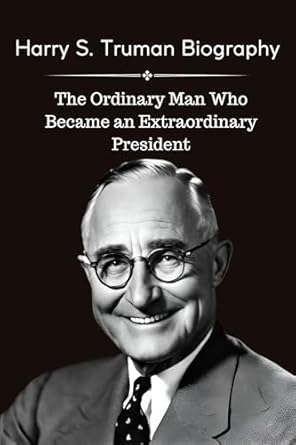
Born on May 8, 1884, in the small town of Lamar, young Harry grew up in a home where the creed was simple but profound: “To do what is right, as God gives us to see the right.” This mantra, imparted by his parents, John Anderson Truman and Martha Ellen Young Truman, would shape his life in ways he could not yet fathom.
In the vast cornfields of Missouri, where farm work was a daily routine, young Harry found his initial calling. Working the fields and managing the cattle instilled in him a tireless work ethic—a work ethic that would carry him from the plowed furrows of his father’s land to the hallowed halls of the White House. The agrarian simplicity of his early life bore the seeds of his future greatness.
A voracious reader and an inquisitive mind, he took it upon himself to acquire knowledge outside the classroom. Truman’s thirst for learning, an unquenchable fire that burned within him, would soon lead him to a life-altering discovery—his lifelong affection for history and biography.
It was the tumultuous early years of the 20th century that would truly forge Harry Truman’s character. The Great War, World War I, summoned him to service. His experiences in the trenches of Europe, among the horrors of the conflict, fundamentally shaped his sense of duty and responsibility. Truman’s emergence from the trenches was not that of a hardened soldier, but a man with an indomitable spirit who knew the world could not be the same again.
A Missouri Childhood
Truman’s Missouri childhood was framed by the modest surroundings of the family farm, but it was also enriched by the wisdom and guidance of his parents. His mother, Martha, instilled in young Harry a sense of compassion, humility, and a deep respect for others.
Harry’s father, John, was a pillar of industry. His belief in the importance of an honest day’s work and steadfast integrity was unwavering. John’s example shaped young Harry’s character in profound ways, laying the groundwork for the man he would become. From his father, Truman acquired not only the virtue of hard work but also a powerful sense of duty to his community and country.
The Trumans, like many in their rural community, could not afford the luxuries of higher education. But Harry Truman was not one to be deterred by financial constraints. In the evenings, under the gentle glow of an oil lamp, he immersed himself in books borrowed from the local library. This act of self-education, performed diligently and in solitude, was a testament to his intellectual curiosity and determination. It was during this time that he discovered a profound fascination with history, biography, and the lives of great leaders.
In the cradle of a Missouri childhood, Harry S. Truman’s character was molded by the values of integrity, hard work, and the pursuit of knowledge. His journey is a testament to the indomitable spirit of the heartland, where the humblest of beginnings can lead to the grandest of destinations.
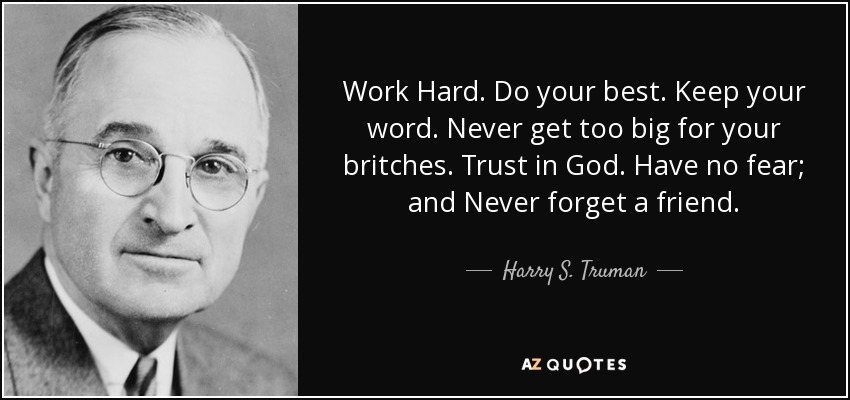
A Soldier’s Duty
For Truman, the decision to join the fight was not a mere response to an obligation—it was a profound expression of duty, a duty to his country, and to the ideals that America held dear.

Truman’s transformation from farmer to soldier was swift. In the summer of 1917, he enlisted in the Missouri National Guard, a move that would eventually lead him to active duty as part of the 129th Field Artillery Regiment.
It is often said that the horrors of war reveal the true mettle of a person. For Truman, the crucible of combat provided the backdrop against which his character would be cast in iron.
Courage Amidst Chaos
Truman’s duty extended far beyond the battlefield. He was also responsible for the well-being of his men, ensuring they were fed, clothed, and cared for amidst the devastation of war. It was here that his compassion and sense of responsibility shone brightly. In the midst of the chaos, he showed unyielding courage, steadfastly leading his men, and ensuring their basic needs were met.
In the crucible of World War I, Harry S. Truman found himself tested and transformed. The perplexity and burstiness of war revealed the depths of his character, his courage, and his commitment to the duty he felt toward his country.
Harry S. Truman’s service as a soldier was not just an episode in his life; it was a crucible that forged the steel of his character, shaping the leader he was destined to become.
Entering Politics
Harry S. Truman’s ascent was neither meteoric nor without its setbacks. As a Democrat in a largely Republican state, the path to political prominence was fraught with challenges. Nevertheless, his dedication to the principles of fairness and responsibility began to resonate with a broad spectrum of constituents.
Truman’s time in the Senate was marked by a strong work ethic and a commitment to the principles that had guided his political career from the beginning. He became known for his deep knowledge of various issues and his willingness to reach across the aisle to find bipartisan solutions—a trait that would become synonymous with his presidency. However, the perplexity of American politics in the 1930s and 1940s would present significant challenges for Truman.
The United States was facing the throes of the Great Depression, a global economic downturn of unprecedented magnitude. The country was also on the cusp of a world war. In this maelstrom, Truman grappled with complex issues such as the New Deal, a sweeping program of economic reform, and the burgeoning international conflict. Truman’s voice in the Senate became increasingly influential. He championed legislation to bolster the U.S. defense effort, recognizing the gathering storm on the horizon. The U.S. entry into World War II saw him advocate for fair treatment of soldiers and veterans, a cause close to his heart due to his own experiences in World War I.
One of the most celebrated segments of Truman’s tenure in the Senate involved his role as the head of the Senate Special Committee for the Examination of the National Defense Program, widely recognized as the Truman Committee. Appointed to head the committee in 1941, Truman was tasked with investigating war contracts, fraud, and profiteering. In this role, he uncovered widespread corruption and inefficiency, earning him a reputation as a no-nonsense, incorruptible defender of the public interest.
The Buck Stops Here
In the annals of American history, few presidents have confronted a world as tumultuous and uncertain as that which faced Harry S. Truman when he assumed office in April 1945.
As he stepped into the shoes of leadership, the burdens of the world weighed heavily on his shoulders.
April 12, 1945, was a day of great sorrow for the nation. President Franklin D. Roosevelt, who had guided the United States through the tumultuous waters of the Great Depression and World War II, passed away. Suddenly, the United States found itself at a critical juncture, with its new leader thrust into the midst of history’s most significant conflict.
He had been vice president for just a few months and had not been privy to the intricate workings of the Roosevelt administration. In fact, he had met privately with Roosevelt only a few times. Now, he was tasked with the most formidable responsibilities of any world leader at the time.
The world Truman inherited was a world in turmoil. Nazi Germany was on the brink of collapse, and the Allied forces were closing in on Berlin. In the Pacific, the war against Japan was still raging, with the battles in the Pacific islands, the bombings of Tokyo, and the relentless march toward the Japanese homeland.
The geopolitical fault lines were shifting, and the international stage was fraught with uncertainty. The escalating rivalries between the United States and the Soviet Union indicated the impending onset of the Cold War.
One of the most momentous decisions that Truman faced during his early days in office was whether to use the atomic bomb on Japan.
The arguments on both sides were compelling. On one hand, the use of the atomic bomb could potentially end the war quickly, saving countless lives that would have been lost in a protracted invasion of Japan. On the other hand, the destructive power of the bomb was incomprehensible, and the ethical implications of its use were profound.
Truman deliberated, consulting with his advisors and listening to various perspectives. In the end, he made the fateful decision to drop the bomb on Hiroshima and Nagasaki. The burstiness of this decision, echoing in the history books and our collective memory, was one that would forever define his presidency.
Europe was in shambles, its cities in ruins, and its people facing immense hardship. In the midst of this devastation, Truman’s leadership came to the fore once again. He presented the Marshall Plan, a comprehensive program for the reconstruction of Europe. This initiative was far more than just an economic recovery plan; it was a geopolitical masterstroke. By aiding in the revival of European nations, the United States sought to ensure stability, thwart communism, and create allies in the post-war world. The perplexity of the situation required an audacious response, and the Marshall Plan was Truman’s answer.
Truman unveiled the Truman Doctrine. This policy, articulated in a speech to Congress, established the principle that the United States would provide support to countries threatened by communism. It was a clear signal that the United States was taking an active role in the containment of communism, a stance that would define the early years of the Cold War.
With the 1948 presidential election looming, Truman found himself facing a deeply divided country and a daunting challenge. The odds seemed stacked against him, and his approval ratings were low.
In a now-legendary “whistle-stop” campaign, Truman traveled the country by train, giving impassioned speeches and connecting with ordinary Americans. His fiery rhetoric and populist approach struck a chord with the electorate. In one of the most famous upsets in American political history, Truman defeated his Republican opponent, Thomas E. Dewey, and won a second term as President of the United States.
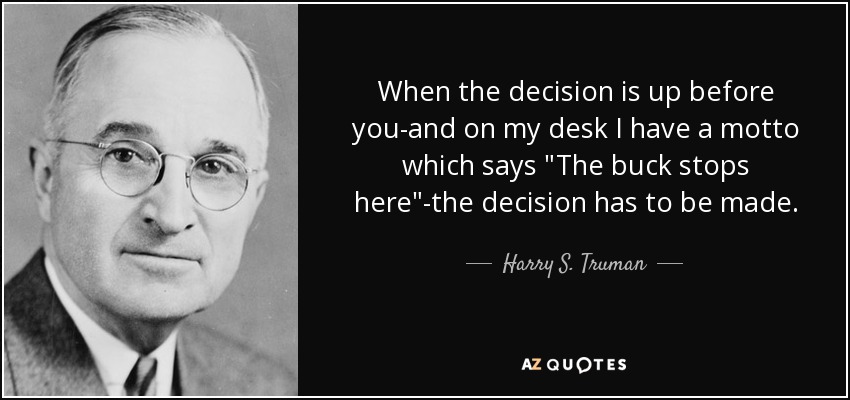
Truman’s presidency was marked by momentous decisions, profound challenges, and a relentless sense of duty. The phrase “the buck stops here,” emblazoned on a sign on his desk, served as a reminder of his unwavering commitment to responsibility and leadership.
Truman’s decisions, from the use of the atomic bomb to the establishment of the post-war order, have left an indelible mark on history.
The Decision to Drop the Bomb
President Franklin D. Roosevelt, Truman’s predecessor, had begun the development of a new and immensely destructive weapon—the atomic bomb. It was a weapon whose perplexity lay in its potential for unprecedented destruction, and its burstiness was found in its potential to hasten the end of the war.
The strategic aspect of the decision was two-fold. On one hand, there was the belief that the use of the atomic bomb might hasten the end of the war, potentially saving countless American lives that would have been lost in a protracted invasion of Japan. On the other hand, the ethical implications of employing such a devastating weapon were profound.
Truman later wrote, “It was a terrible responsibility to have to order the use of something that was so terribly destructive, destructive beyond anything we have ever had.”
On the morning of August 6, 1945, the Enola Gay, a Boeing B-29 Superfortress bomber, took off from the island of Tinian in the Pacific. It carried with it an atomic bomb named “Little Boy.” At 8:15 a.m., the bomb was dropped over Hiroshima, Japan, and the world changed in an instant.
The world had witnessed the devastating force of nuclear weaponry for the first time, and the moral implications of this moment hung heavy over the globe.
Truman’s decision to employ atomic weapons remains one of the most debated and controversial in history.
Truman’s resolve in the face of this monumental choice, whether seen as an act of pragmatism or a moral quandary, exemplifies the gravitas of leadership during turbulent times.
A New World Order
In early 1945, as World War II drew to a close, Truman found himself thrust into the international arena with little preparation. One of his first tests was the Yalta Conference, where he met with Winston Churchill and Joseph Stalin to discuss the future of post-war Europe.
One of the key outcomes of the Yalta Conference was the agreement to establish the United Nations, an international organization aimed at preventing future conflicts and promoting cooperation among nations.
The division of Germany, while a practical solution to manage the occupation and ensure democratic governance, would have profound and lasting implications. It foreshadowed the geopolitical rift that would become the Cold War, with the United States and the Soviet Union as the primary players in the world’s most enduring ideological struggle.
As the world grappled with the emerging Cold War, Truman unveiled two monumental policies: the Truman Doctrine and the Marshall Plan. The Truman Doctrine, articulated in a speech to Congress in 1947, declared that the United States would provide support to countries threatened by communism. It was a bold commitment to contain the spread of Soviet influence and the ideological threat of communism. The Marshall Plan, officially known as the European Recovery Program, was introduced in 1947 as a comprehensive initiative to aid in the reconstruction of war-ravaged Europe.
The North Atlantic Treaty Organization (NATO), established in 1949, was another significant development in the quest for a new world order.
The Marshall Plan and the Truman Doctrine
Truman recognized that a healthy and thriving Europe was not only in the interest of the nations themselves but also essential to prevent the spread of communism. The economic revitalization of Europe was a strategic imperative, and the Marshall Plan was the answer. It was a burst of American economic aid, intended to rebuild infrastructure, stabilize currencies, and bolster trade.
The Marshall Plan, when enacted, proved to be a resounding success. It revitalized Europe’s economies, providing a lifeline for nations on the brink of collapse. Infrastructure was rebuilt, industrial output surged, and trade flourished. The plan was a beacon of hope in a world still scarred by war.
The Marshall Plan and the Truman Doctrine were not just policies; they were monumental pillars of Truman’s presidency. They demonstrated his steadfast resolve to shape the world order and safeguard American interests in a complex and uncertain post-war world.
The Korean War
In the aftermath of World War II, the Korean Peninsula found itself divided, a microcosm of the broader global power struggle between the United States and the Soviet Union. Korea had been under Japanese colonial rule since 1910, but after Japan’s defeat, the Allies decided to divide the peninsula at the 38th parallel. The Soviet Union occupied the north, while the United States took charge in the south. This division was meant to be temporary, with the goal of ultimately unifying the country. However, the burstiness of Cold War geopolitics had already set in, and the division proved more enduring than anticipated.
The Decision to Intervene
Truman, known for his measured and deliberate approach, swiftly made a decision. He recognized that the principles of the Truman Doctrine, which aimed to contain the spread of communism, were at stake. Furthermore, he believed that the United States had a moral duty to come to the aid of South Korea, a fledgling democracy under assault.
The United Nations, under American leadership, took action to repel the North Korean invasion. An international coalition, predominantly made up of American and South Korean forces, confronted the North Korean aggressors.
The Stalemate
As the war raged on, it became clear that a decisive victory was elusive. Both sides were locked in a brutal and costly conflict. Truman, a leader acutely aware of the human toll of war, was determined to bring the conflict to an end. He sought negotiations, and in July 1951, an armistice was signed. The war had ended in a stalemate, with the 38th parallel remaining the de facto border between North and South Korea.
Truman’s steadfastness in the face of this conflict showcased his unwavering commitment to defending democratic values and containing the spread of communism.
Civil Rights and Desegregation
Harry S. Truman’s presidency was a study in leadership amid perplexity and burstiness, and nowhere was this more evident than in his commitment to civil rights and desegregation. In a post-war America struggling to redefine itself, Truman took bold steps to confront the pervasive racial injustice and inequality that had long haunted the nation.
The nation had just emerged victorious from the fight against tyranny in World War II, a battle that had been fought in the name of freedom and democracy. Yet, back home, millions of African Americans continued to face discrimination, segregation, and systemic inequality.

How could the United States champion the principles of democracy and liberty on the world stage while racial segregation persisted at home? It was a moral dilemma that Harry S. Truman, a man who had seen the world transformed by the fires of war, could not ignore.
In 1946, he created a Presidential Commission on Civil Rights, tasked with investigating the status of civil rights in the United States. The commission’s findings were grim, revealing systemic discrimination and segregation in housing, education, and employment. Truman, with his characteristic forthrightness, embraced the report and set out to take meaningful action.
Truman’s commitment to civil rights found expression in two historic executive orders. The first, issued in 1948, ended racial segregation in the armed forces. It was a groundbreaking move that shattered a long-standing barrier and affirmed the right of every American, regardless of their race, to serve their country in the military. The burstiness of this executive order was profound. It set the stage for a more inclusive and equal America and demonstrated that Truman was willing to take bold steps to challenge the status quo. The armed forces, once a bastion of segregation, were now at the forefront of desegregation.
The second executive order, issued the same year, established the Fair Employment Practices Committee (FEPC). This committee was tasked with combating employment discrimination based on race, color, religion, or national origin. It was a significant leap forward in the battle for civil rights, particularly in the workplace. The FEPC was the embodiment of Truman’s commitment to equal opportunity, an acknowledgment that racial discrimination in employment had no place in the post-war America.
Truman continued to advocate for desegregation in other facets of American life. He called for the desegregation of public schools, recognizing that the separate but equal doctrine was a farce. He also sought to end racial segregation in public housing, further dismantling the institutionalized racism that had long divided communities. These initiatives were met with resistance and opposition from those who clung to the deeply entrenched racial hierarchies.
Truman was unyielding. He made civil rights a central issue of his campaign, becoming the first president to address a national convention on television. His “civil rights” speech at the Democratic National Convention in Philadelphia was a defining moment. He declared, “My forebears were Confederates, but my very stomach turned over when I had learned that Negro soldiers, just back from overseas, were being dumped out of Army trucks in Mississippi and beaten.” In a burst of audacity, Truman boldly proposed a civil rights plank, which included desegregation of the military and federal employment. The plank passed, and he won the Democratic nomination.
Truman’s commitment to civil rights and desegregation was a burst of moral and political courage. It was a pivotal chapter in his presidency, a moment when he confronted the perplexity of America’s racial divisions head-on. His leadership, in the face of both internal party divisions and entrenched societal discrimination, left an indelible mark on the struggle for civil rights. Truman’s legacy is one of audacity and determination, a testament to the enduring power of leadership in the pursuit of a more just and equal America.
Fair Deal and Economic Challenges
The New Deal, ushered in by Franklin D. Roosevelt during the Great Depression, had reshaped the American government’s role in the economy and society.
The perplexity lay in how to continue the legacy of the New Deal while adapting to the realities of a post-war world.
The Fair Deal’s Aims
The Fair Deal was Truman’s answer to this perplexity. Announced in his 1949 State of the Union address, it was a sweeping set of proposals that encompassed a wide array of social and economic reforms.
The Fair Deal encompassed ambitious goals in healthcare and civil rights. Truman proposed a national healthcare program that aimed to provide medical coverage for all Americans.
The Fair Deal may not have realized all its goals, but it demonstrated Truman’s unwavering dedication to addressing the pressing issues of his time, leaving a legacy of progressive ideals and a commitment to a fair and just America.
The Whistle-Stop Campaign
Harry S. Truman’s Whistle-Stop Campaign of 1948—the “give ’em hell, Harry” tour, as it came to be known, was not just a pivotal moment in Truman’s political career; it was a testament to his indomitable spirit, his fiery oratory, and his unwavering connection to the American people.
As Truman contemplated running for re-election, he faced a divided Democratic Party. Progressive elements within the party advocated for civil rights and social reforms, while conservative southern Democrats were vehemently opposed to these ideas.
Truman, the consummate underdog, decided to take his case directly to the American people. He embarked on a campaign that would become legendary—the Whistle-Stop Campaign.
Truman, with his signature plain-speaking style, intended to crisscross the country, speaking directly to voters at train stations, fairs, and rallies. His mission was to rekindle the spirit of the common man and revive his own faltering political fortunes.
Truman’s team organized an ambitious schedule of over 300 whistle-stop speeches, covering thousands of miles. It was a grueling and relentless journey, but Truman relished the opportunity to connect with everyday Americans.
His speeches, delivered with a folksy charm and an unwavering conviction, were a burst of energy and determination. The most famous of his speeches, the one that gave rise to the rallying cry “give ’em hell, Harry!” was delivered in St. Louis, Missouri. Truman proclaimed, “I don’t give them hell. I just tell the truth, and they think it’s hell!” It was a line that captured the essence of his campaign—the courage to speak candidly and unapologetically.

The 1948 presidential election featured an iconic burstiness moment—the erroneous headline of the Chicago Daily Tribune declaring “Dewey Defeats Truman” on the morning after the election. The newspaper, along with many pollsters and pundits, had underestimated Truman’s campaign. Truman’s relentless whistle-stop tour had paid off. He defied the odds and won the election, securing a second term as President.
The campaign was not just a political triumph; it was a celebration of the American spirit. Truman’s unwavering belief in the common man and his determination to represent their interests resonated deeply with the American people.
The Red Scare and McCarthyism
As the world emerged from the ashes of World War II, it quickly became clear that the post-war era would be defined by a new and complex struggle—the Cold War. The United States and the Soviet Union, former allies in the fight against fascism, now found themselves in a tense and ideologically charged rivalry.
Senator Joseph McCarthy led McCarthyism, as it came to be known, by making unsubstantiated accusations, fear-mongering, and the erosion of civil liberties. McCarthy’s claims of communist infiltration in the government, the military, and even Hollywood sent shockwaves through American society.
Truman, while committed to protecting national security, was deeply concerned about the excesses of McCarthyism. He recognized that the Red Scare was eroding the very freedoms and values the United States sought to protect.
The Red Scare had exposed the vulnerabilities of American democracy in the face of fear and paranoia. The fear of communism and the excesses of McCarthyism revealed the fragility of democracy in times of crisis. Truman’s response, though not without controversy, reflected his unwavering commitment to American principles and his belief in the power of reasoned discourse.
Foreign Policy Challenges
The Berlin Airlift
In response to a Soviet blockade of West Berlin, Truman authorized an unprecedented airlift operation to supply the city’s residents with food and essential goods. The airlift, sustained over many months, was a remarkable demonstration of American determination and commitment to defending the principles of democracy.
The United Nations, born out of the ashes of World War II, was another foreign policy achievement during Truman’s presidency. The perplexity lay in creating an international organization that could prevent future global conflicts.
The UN was founded on the principles of collective security, cooperation, and the promotion of peace. It was a bold vision for a post-war world, one that acknowledged the complexity of international relations and the need for diplomacy.
Truman’s decision to intervene in Korea, as part of the containment policy to prevent the spread of communism, demonstrated his unwavering commitment to defending democratic values and containing the Soviet Union’s influence.
Truman’s presidency was a study in leadership during a time when the world was in flux. His foreign policy decisions, in the face of great challenges, demonstrated his ability to adapt, to stand firm on principles, and to seek solutions in a complex and ever-changing global landscape.
The 22nd Amendment and Retirement
By 1952, after eight years in office, Truman had reached the end of his journey in the White House. The 22nd Amendment, limiting presidents to two terms, had been passed in the wake of Franklin D. Roosevelt’s unprecedented four-term presidency.
Truman had made difficult decisions, from dropping the atomic bombs on Japan to intervening in the Korean War.
Truman’s retirement from the presidency was a burst of personal freedom and a return to a more ordinary life. The man who had risen from humble beginnings in Missouri to occupy the highest office in the land now found himself back in Independence, Missouri.
Truman wrote his memoirs, engaged in public speaking, and began a book-length history of his life. His return to Independence allowed him to connect with the American people on a more personal level, unburdened by the responsibilities of the presidency.
He became the driving force behind the creation of the Harry S. Truman Library and Museum, dedicated to preserving the historical record of his presidency. The library was a testament to Truman’s belief in the importance of understanding and learning from history. It became a hub for scholars, researchers, and ordinary citizens seeking to explore the complexities of the post-World War II era.
Truman’s commitment to openness and transparency was evident in his decision to make his presidential papers available for public research, a decision that laid the groundwork for future presidential libraries.
In 1953, Truman received a Pulitzer Prize for his memoirs, a recognition of the historical importance of his presidency.
His legacy, as both an ordinary man who became an extraordinary president and a retired leader who continued to make a difference, endures as a testament to the enduring power of leadership in America’s story.
Memoirs and Legacy
Truman’s memoirs were characterized by their honesty. He did not shy away from acknowledging his own doubts and struggles as he grappled with the burstiness of the presidency. He freely admitted his uncertainty when deciding to use atomic weapons against Japan, emphasizing the weight of the decision and the lives it saved.
He reflected on the divisiveness of the Korean War, the difficulties of the loyalty program, and the tensions of the early Cold War. His memoirs were not a glossed-over version of history; they were a burst of candid self-appraisal.
In his own words, Truman offered a perspective on the complexities of diplomacy, the struggles of statesmanship, and the challenges of making decisions that would shape the course of history.
Truman’s legacy is not only one of leadership but also of character. He was known for his plain-speaking style, his unwavering commitment to democratic principles, and his determination to uphold the Constitution. His decision to desegregate the military, even in the face of strong opposition, showcased his dedication to civil rights.
He was a President who believed in the ideals of democracy and the importance of standing up for what is right, even in the face of perplexity and opposition. His legacy is a reminder that leadership is not about the trappings of power but about the principles and values one upholds.
Truman’s Personal Life
Harry S. Truman was, at heart, a man from Independence, Missouri. His roots in the heartland of America were the foundation of his character and values.
He overcame economic struggles and limited formal education to become a lifelong learner. His love of books and history fueled his intellectual curiosity.
At the center of Truman’s personal life was his love story with Bess Wallace. Their relationship, a burst of enduring love, began in childhood and lasted a lifetime. Their love story, grounded in mutual respect and understanding, provided a personal anchor in a turbulent political sea.
Truman’s family life, like any other, was marked by the burstiness of joy and the perplexity of challenges. He and Bess had one child, Margaret, and their role as parents added layers of complexity to their lives. Truman, who often referred to himself as the “Boss” of the family, faced the challenge of balancing his public and private responsibilities. The Trumans’ decision to keep their daughter out of the spotlight was a burst of protective parenting. It was a perplexing choice in an era when presidential families were under intense scrutiny. But it was indicative of their commitment to preserving a semblance of normalcy in their lives.
Truman’s retirement was a burst of activity, reflecting his belief in the importance of lifelong learning and service to others.
The Man Behind the Desk
The Power of Curiosity
Truman was an avid reader and a lifelong learner. His personal library, a trove of history and literature, was a testament to his love of knowledge.
Truman’s commitment to education, even in the burstiness of his presidential duties, was remarkable. He understood that leadership was not a destination but a journey—a lifelong process of learning and growth. His love for history was particularly poignant; it provided him with the depth and perspective needed to navigate the complex world stage.
One of Truman’s most celebrated qualities was his plain-speaking style. He was known for his honesty and directness, often delivering difficult messages with candor. This straightforwardness was not only a burst of his personality but also a reflection of his Midwestern values.
He believed in clear, honest communication with the American people. His famous sign on the Resolute desk—”The Buck Stops Here”—symbolized his willingness to accept responsibility and make difficult decisions. It was a burst of leadership that resonated with a nation seeking clarity in uncertain times.
His legacy serves as a reminder that leadership is not about the trappings of power but about the principles and values one upholds.
The Truman Library and Museum
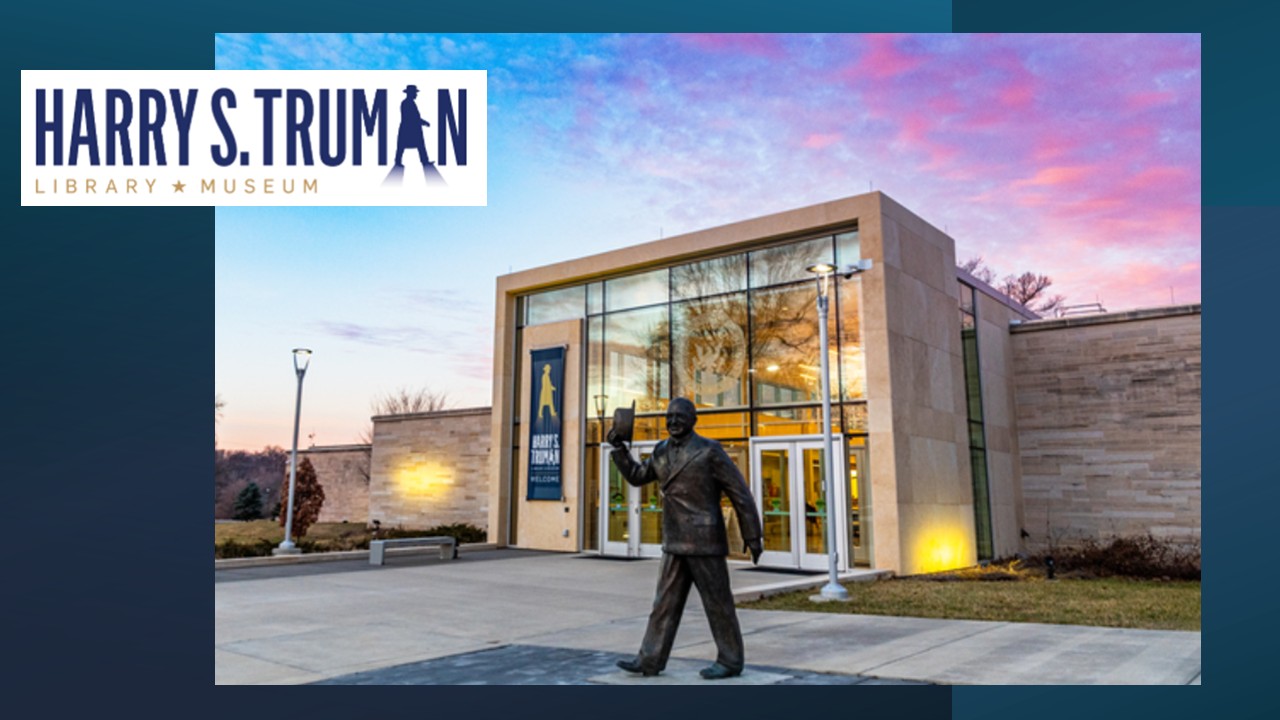
The story of the Truman Library and Museum is a burst of vision and perseverance. It was not merely a repository of documents and artifacts; it was Truman’s way of ensuring that the complex and tumultuous era of his presidency would be accessible to future generations.
In 1946, with the presidency still in his hands, Truman approached Congress with a proposal for a library that would house his presidential papers.
The Truman Library was more than just a collection of papers. It was a reflection of Truman’s commitment to transparency and openness in government. Truman believed that the American people had a right to know the intricacies of their government’s decisions.
Offering a glimpse into Truman’s life beyond the presidency. The personal letters, diaries, and mementos allowed visitors to connect with the man behind the office.
In 1957, the Truman Library expanded to include a museum, creating a dynamic blend of the perplexity of history and the burstiness of a hands-on learning experience. The museum showcased not only Truman’s presidency but also the events and challenges of his time. From the end of World War II to the birth of the Cold War, visitors could explore the burstiness of the post-war world. One of the museum’s highlights was a replica of the Oval Office during Truman’s presidency.
The Truman Library and Museum continues to exert a significant influence on the study of history and leadership.
Truman’s decision to make his presidential papers available for public research set a precedent for transparency in government.
Truman’s story, from an ordinary start to an extraordinary presidency, is a testament to the power of character, leadership, and a commitment to democratic principles.
Truman’s Enduring Influence
One of Truman’s most significant and enduring contributions was his stance on civil rights and desegregation. His actions paved the way for subsequent civil rights movements and had a profound and lasting impact on the struggle for equality. Truman’s legacy in the realm of civil rights endures, and he is often regarded as a pioneer of the modern civil rights era.
The Truman Doctrine, announced in 1947, laid the groundwork for the United States’ policy of containment during the early years of the Cold War.
The Marshall Plan, which provided economic assistance to war-ravaged European nations, was another burst of Truman’s foreign policy vision. It not only helped rebuild Europe but also solidified America’s role as a global superpower.
The “Trumanites”—a group of advisors and associates who served in the Truman administration—also carried on his legacy.
His values of integrity, plain-speaking, and principled leadership continued to guide those who had served under him.
The “Truman Balcony” at the White House, added during his presidency, has also become an enduring symbol of Truman’s time in office. It serves as a burst of inspiration for future Presidents, a reminder of the values of integrity and principled leadership that Truman embodied.
Conclusion: The Ordinary Man’s Extraordinary Legacy
Truman’s life was characterized by a perplexity that mirrored the challenges of his time. Born into humble beginnings in Independence, Missouri, he imbibed the values of integrity, honesty, and hard work.
His early experiences as a farmer, a haberdasher, and a World War I artillery officer provided him with a unique perspective on the struggles of everyday Americans. Truman’s journey from a Missouri childhood to the presidency was a testament to the extraordinary potential of an ordinary citizen.
Truman’s famous sign on the Resolute desk—”The Buck Stops Here”—captured his sense of responsibility and his readiness to accept the consequences of his decisions.
At the heart of Truman’s legacy is his character. He was a plain-spoken, honest man who held fast to his principles.
Truman’s capacity to adapt, to confront the perplexity of his time with courage, and to make decisions that shaped the course of history was a testament to the enduring power of character. Truman’s legacy continues to inspire, offering a burst of motivation to future leaders and a perplexing reminder that even an ordinary man can leave an extraordinary mark on the pages of history.
Truman’s commitment to democratic values, his unwavering dedication to civil rights, and his willingness to make difficult decisions in the face of perplexity continue to shape the course of American history. His legacy stands as a burst of inspiration, a reflection of the values that guide principled leadership, and a testament to the extraordinary potential of an ordinary citizen.
Truman’s life and presidency are a testament to the enduring power of character and the remarkable influence of an ordinary man who became an extraordinary President.