
Click here to return to Blog Post Intro
Unanswered Prayer from The Prayer Course by Pete Grieg
 Pete provided an honest look at prayer when it doesn’t work the way we want it or need it to in his book God on Mute. He talked about the medical trials his wife faced—with a unique form of epilepsy—and how he cried out to God with every fiber of his being…with no response.
He admitted that he often moves from a place where he believes prayer can save the world to questioning whether prayer changes anything, especially in his personal life. In those times, Pete holds on to the promise of Psalm 30:5 –

In Mark 14:32-36, Jesus is in great turmoil in the Garden of Gethsemane, as He faced the cross. He prayed the great prayer of relinquishment, “Take this cup from me. Yet not but I will, but what you will.”
In His greatest hour of need:
- Jesus takes His three best friends with Him.
- Jesus prays.
- His vulnerable prayer is recorded for us in great detail:
- “Abba, Father.” He anchored Himself in the love of God.
- “Everything is possible for you.” Jesus affirms God’s power.
- “Take this cup from me.” Jesus doesn’t want to suffer and die, showing His radical honesty and vulnerability—honest with God and Himself.
If God loves us and is all-powerful, why is there suffering in the world? Why do our prayers seem to fall unanswered?
- God’s World: Some prayers aren’t answered because of the way God has made the world to work. We’re part of His larger design. C.S. Lewis once said, “That God can and does, on occasions, modify the behavior of matter and produce what we call miracles, is part of Christian faith, but the very concept of a common, and therefore stable, world, demands that these occasions be extremely rare.”
- God’s War: The Bible teaches that we are in a spiritual battle with a vicious enemy. Some prayers aren’t answered because Satan is actively opposing the will of God.
- God’s Will: Sometimes, God opposes our prayers and says “No” to them. We have to recognize that God knows best, and we can often see why when we look back on life.
In those times, we have to trust God even though we don’t understand why our prayers are unanswered. God’s silence is not the same as God’s absence. It’s not that God has abandoned us, it’s that He’s trying to mature us into something new.
Faith is God’s gift to us. Faithfulness is our gift back to God, especially in those times when our prayers seemingly don’t work.
The Prayer that Turns the World Upside Down by Dr. R. Albert Mohler, Jr.
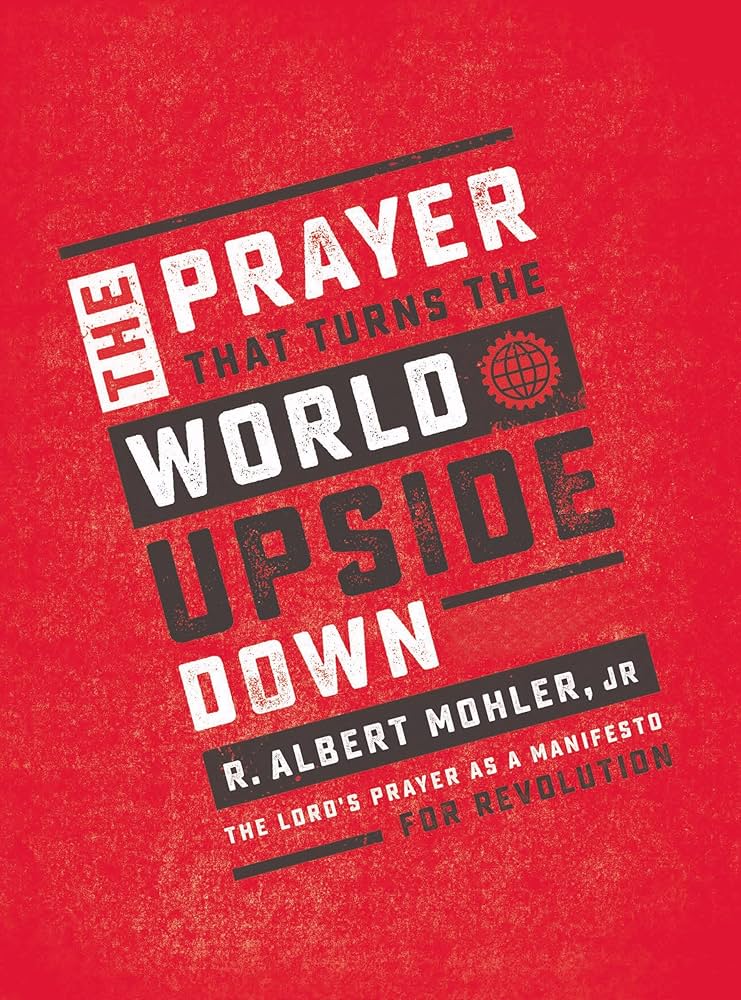
The Reign and Rule of God: Your Will Be Done
Jesus then tells them to pray, “Your will be done.”
The “will of God” can be used in two different ways. First, Scripture can speak of God’s will of decree, or what we would call God’s sovereign will. It refers to his absolute, sovereign rule over all things. The only reason anything exists is because God has willed it to exist.
Second, Scripture uses the phrase “will of God” to refer to God’s commandments. Theologians also refer to this use of the “will of God” as God’s revealed will. The revealed will of God speaks to what God expects of his human creatures.
He cannot be speaking of God’s sovereign will because God’s will is already done in heaven as it is on earth. As the Psalmist wrote, “Whatever the Lord pleases, he does, in heaven and here on earth, in the seas and all deeps” (Psalm 135:6). Jesus is clearly referring to God’s revealed will. He is asking the Father to reshape the hearts of every single person that God is obeyed and glorified by men on earth as the angels obey and glorify God in heaven.
In the petition, “Your will be done on earth as it is in heaven,” Jesus is further explaining what it looks like for God’s kingdom to come from heaven to earth.
Praying “your will be done on earth as it is in heaven” also reorients our own sense of personal autonomy and sense of control over our own lives and situations. This petition causes us to forfeit all our personal claims of lordship and sovereignty over our lives. This petition expresses a humble resignation to and desire for the reign and rule of God.
As J.I. Packer noted, “Here more clearly than anywhere the purpose of prayer becomes plain: not to make God do my will (which is practicing magic), but to bring my will into line with his (which is what it means to practice true religion).”
A Layman Looks at the Lord’s Prayer by W. Phillip Keller

It is true to say that uncounted millions of men and women have repeated these four words without having the faintest idea what God’s will is. It is even more sobering to reflect that even more people have repeated them without any intention whatever of seeing to it that our Father’s will is done, even if they did know it.
In a sense there is much vain and pointless repetition of a phrase which is actually enormously important for the Christian. It is well to remind ourselves that this is the very practice which Christ had warned His disciples not to indulge in when He said very plainly, “But when ye pray, use not vain repetitions, as the heathen do: for they think that they shall be heard for their much speaking” (Matthew 6:7).
Doing the Father’s will is the one gigantic, central theme which should dominate the lives of all God’s children. That is why Jesus put it at the very heart and center of this prayer.
Again and again, Jesus emphasized doing God’s will during His earthly life. For example, in John 6:38, He states, “For I came down from heaven, not to do mine own will but the will of him who sent me.”
The will of God is simply God’s intentions. It is what He purposes. It is what He plans and wants to be done.
God, our Father, has a mind. He reasons. He thinks.
- Isaiah 1:18 – “Come now, let us reason together.”
- Jeremiah 29:11 – “I know the thoughts that I think toward you.”
- Isaiah 55:8 – “My thoughts are not your thoughts.”
Our heavenly Father has emotions. He feels. He senses.
- John 3:16 – “For God so loved the world…”
- Hebrews 4:15 – He is “touched with the feeling of our infirmities.”
- Psalm 103:13 – “As a Father pitieth his children, so the Lord pitieth them who fear him.”
And likewise, He has a will. With it He decides. He chooses. He purposes and plans.
- Haggai 2:23 – “I have chosen thee, saith the Lord of hosts.”
- Ephesians 1:4 – “He hath chosen us in him before the foundation of the world.”
There is something very humbling about recognizing and acknowledging the magnitude of God’s will. It tends to put the colossal conceit and intellectual pride of self-willed men into proper perspective, and, for this reason, most men reject it. They do not wish to acknowledge the will of God in the universe, much less accept the idea that it should be done at all in any area of their personal lives.
The ongoing of God’s will, ultimately, will result in the millennial kingdom and the creation of a new heaven and a new earth of such a quality that nothing we now know can be compared to it. It will enjoy such perfection, peace, and plenty as to completely outdazzle even our most fantastic hopes.
Our Father’s will has been articulated for us in human language. It has been passed down to us in a unique and very wondrous disclosure of what His intentions are toward us and for us. Through His written Word, we can obtain very clear and explicit concepts of what He wants.
Naturally, it follows, that if we are going to know the will of God in everyday affairs, we are going to have to read the Book in which that will has been laid out.
The will of God is not restricted to purely spiritual matters in Scripture. It covers the entire range of all our human activities.
God’s will is very much concerned that the human body be properly fed, clothed, exercised, regulated, rested, and kept clean. God’s will is very much concerned with the simple fundamentals of wholesome houses, clean streets, well-kept farms, honest businesses, and the wise use of our natural resources. It permeates and penetrates every part of our physical world. And it is double-talk of the worst sort if we claim to be doing God’s will in our spirits while we behave like beasts in our bodies.
The Sermon on the Mount towers in glowing grandeur far above any other ethic ever propounded upon the planet. It is the will of God for the character and conduct of His people.
Many of God’s children become very confused over deciding what is God’s will in very practical issues. Here are seven sure guidelines to assist one in finding and doing God’s will:
- Is it definitely in agreement with God’s will expressed and written in His Word?
- Have you faced a similar situation before? If so, what did God show you as His will then? If you made a mistake, don’t repeat it.
- If the decision is difficult and far beyond you, seek the wise and prayerful counsel of mature and godly persons who have the mind of Christ and know who to ascertain God’s will.
- Make the matter one of quiet but earnest prayer. Ask God, your Father, by His Spirit, to impress upon you distinctly by a deep inner conviction what the proper course of action is.
- Our Father has endowed us with a fund of wholesome and practical knowledge which He expects us to use. We ignore it with risk.
- Expect and wait to see events and circumstances surrounding this situation alter in such a manner as to influence your mind and will in determining God’s will. Time takes care of many decisions. We are prone to be too impatient and hasty. God is seldom in a great rush about things.
- Anticipate that as time goes on, the way will either open or the way will close for you but proceed along any given course. This should be accompanied by a great sense of acceptance, gladness that you are being made aware of God’s will, happiness in doing it, and peace about it.
When these points are followed precisely, and there is no great conflict between them, one can rest assured of knowing and doing God’s will.
If the mind is divided and no clear guidance is immediately available, there is a helpful way to arrive at a choice.
With an open mind, ask God to guide unmistakably in listing the pros and cons on a divided sheet of paper. Being utterly honest before the Lord, ascribe three points to each reason—pro or con—of major importance. Ascribe two points to each reason of moderate importance. And give only one point to each reason of minor importance. Then total up the figures. It will sometimes astonish one how overwhelming the evidence is for or against a decision. If one is as honest and objective as possible before God in this, it is proper to feel at peace about the outcome.
The Lord and His Prayer by N.T. Wright

N.T. Wright points out, “I used to think of this clause simply as a prayer of resignation. ‘Thy will be done’, with a shrug of the shoulders: what I want doesn’t matter too much; if God really wants to do something I suppose I can put up with it.
No, this is the risky, crazy prayer of submission and commission, or, if you like, the prayer of subversion and conversion. It is the way we sign on, in our turn, for the work of the kingdom. It is the way we take the medicine ourselves, so that we may be strong enough to administer it to others. It is the way we retune our instruments, to play God’s oratorio for the world to sing.
If it was part of Jesus’ task to teach his followers to pray in this way, it is in a sense our task to teach the world to pray in this way. How might we get the opportunity? In Luke’s gospel, Jesus waited until his followers asked him for a prayer; and the reason they asked was because they saw what he was doing. There’s a lesson there.
As we continue through my 2026 Spiritual Growth Journal, Jesus continues his prayer, “Your Will Be Done” which reorients our sense of control over our lives and places our heart in a posture of surrender, trust, obedience, and acceptance of God’s guidance.
“Father, Your will be done. Amen. So be it!’