
Click here to return to Blog Post Intro
A Layman Looks at the Lord’s Prayer by W. Phillip Keller

“Our Father which art in heaven” is a phrase repeated glibly by millions of men and women who have never stopped to ask, “What does it really mean?” If pressed on the point, they would scarcely know what to say.
Too many of us are far too vague in our ideas about spiritual realities. If God is in heaven, then we ought to know something about heaven.
The word heaven is derived from the old Anglo-Saxon word heaveon, meaning to be lifted up or uplifted. It implies the thought of a place or a state which is above that of the common place condition on earth.
Three Distinct & Different Realms of Heaven
1. Earth’s Atmosphere
The word is used over and over with reference to the earth’s atmosphere, describing the envelope of air that surrounds the planet, conditions our climate, and sustains life. The formation of clouds, the precipitation of rain or hail or snow, the water vapor that provides mist and dew and frost, all regarded as coming from heaven.
2. Outer Space
The word heaven or heavens refers to the sun, moon, stars, and sky. It denotes the unmeasured immensity of numberless galaxies flung across infinite expanses. It is used for the unending realm of stellar constellations that circle through the night in majestic movements.
3. The Realm of God
Throughout the New Testament, heaven is described as a definite place, a heavenly country, a New Jerusalem, a home prepared especially for God’s children.
John, the grand old apostle and much-loved prophet of God, went to great pains to recount all he had been shown of heaven in his Revelation.
The Word of God says our Father is in heaven. Does this then mean He can be in the earth’s atmosphere? Yes. Does it imply that He can occupy outer space? Yes. Does He inhabit the realm of the righteous? Yes. For God is a Spirit, able to be present anywhere and everywhere.
There is such a thing as moving quietly and humbly through life, keenly aware and conscious of the fact that we are walking with God our Father. We sense that we are surrounded with His presence in the very air we breathe, the water we drink, the food we eat.
What is true in sensing the presence of our Father in the immediate environment around us applies equally to the vast reaches of outer space. The moon, planets, sun, stars, galaxies, and remote immensity of space are, despite their enormous distance from us, still very much a vital and moving part of our lives.
Our Father is very much in the heave on outer space. He draws near to us in His own inimitable way and there speaks peace and comfort to our questing souls.
How good to know our Father is in His heaven and that He does in fact hold the whole world in His hands (Job 41:11).
Fourteen Earthly Devastating Difficulties Not In Heaven
1. Assaults of our Archenemy, Satan
We are free from Satan. In heaven, the child of God no longer contends with the subtle insinuations and dark deceptions devised by the devil. His temptations and deceitful tactics are no more.
2. Strain of Separation
We are released from the pain of parting ways with loved ones. We are finally at home.
3. Tears of Anguish, Despair, and Frustration
As C.S. Lewis points out in his book The Problem of Pain, life carries with it more pain than pleasure.

4. Death
Because of the power of our Father’s eternal presence, and because of what Christ accomplished at Calvary, death cannot exist.
5. Sorrow of Regrets and Remorse
At our best, we are bound to have made some grievous errors on earth. We have entertained wrong attitudes, spoken unkind words, harbored selfish motives, and indulged in wrongful acts. Out of all this, there flows a muddied stream of remorse and sorrow. From all of this, we enjoy total deliverance.
6. Crying
There is no crying in this wondrous realm—crying in the sense of a soul in search of truth, crying in the way that our hearts cry out for God. All of this will be gone.
7. Pain
It is wondrous to anticipate freedom from bodily, physical suffering.
8. Temple, Church, Sanctuary, or Formal Structure of Any Sort
In our new, eternal abode, there is no formal edifice. There will be delightful, relaxed freedom between all God’s people. Gone are the formal barriers and doctrinal divisions which divide us down here.
9. Sun or Moon
No longer will we be limited by the time-space concept which conditions life on planet earth. We grow up tied to time. We are always meeting deadlines and keeping appointments according to time. We set schedules, plan programs, and organize all of our lives around the clock and calendar.
10. Night
There will be no physical darkness as we know it here.
11. Misunderstandings
Beyond physical night, the night or darkness of misunderstanding will be banished. To think that at long last the misunderstandings, the darkness and clouds which so readily come between human beings, will be dispersed forever, is utterly beyond our grasp. About eighty percent of the problems and perplexities that plague the human race are caused by the misunderstandings which cloud our relationships.
12. Defilement
We hear things which distort our minds and weaken our wills. We read about, see, handle those things which draw us away from our devotion to God. In the new realm, there is nothing to contaminate our thoughts nor mar our moral lives.
13. Deceit, Falsehood, Lies, or Dishonesty
To a large degree, all of us on earth have become accustomed to the deception, duplicity, and scheming which make up a part of our false fronts. We tend to live behind masks. We would have others believe that we are making a success of things.
14. Sin
Just think, the old, wearisome, never-ending downward pull of evil will have finally come to an end. It will be as though great lead weights have been unstrapped from our feet. We can walk freely, yes, even run, in the paths of righteousness. Imagine being no longer burdened down with the contamination of sin that clogs our feet, no longer loaded with the evil that stains our souls and starts our tears. We will revel in the ecstasy of a new glory given by our lovely Lord!
Seven Beneficial Aspects of Heaven
The following seven aspects are not fully known to us in our earthly condition. Along with the fourteen elements above, this makes a total of three times seven, representing the ultimate in divine perfection.
1. Satisfaction & Tranquility
There is a dimension not known here. A quality of life exists there, seldom if ever experienced by us here. It has to do with complete and enduring contentment and repose. The very nature and unchanging character of our Father insures that our satisfaction shall be complete and continuous.
2. Abundant Life
Life there has such an abounding quality that we really have nothing on earth with which to compare it. There the ever-present healing influence of God’s own presence will be the balm that mends our broken spirits and heals our injured hearts.
3. Absolute Justice & Fairness
God’s Throne is there, and where He rules, justice and righteousness reign. Complete justice and fair treatment are seldom experienced in this world. On every side, we are dismayed by the injustices perpetrated between men and nations. Human beings are quick to exploit each other. We do not hesitate to take undue advantage of others when the opportunity arises. Gone will be discrimination, unfairness, scheming, conniving, and the smooth tactics and fast talk that take innocent people by surprise. What a relief!
4. Service to God
All the word we do there will have special significance and deep meaning. Millions of people live lives “of quiet desperation,” giving efforts, energy, time, intelligence, and attention to work they find empty and meaningless.
5. Exquisite Fellowship
This is the best-known and most commonly-accepted attribute of heaven. There we shall see our heavenly Father face-to-face. The joy of such an encounter will be tremendous. There is no question that it will bind us together in a common fraternity and family atmosphere.
6. Full & Complete Revelation of God
There will be a full and complete illumination of every aspect of life. No longer will there be doubts, misgivings, or apprehension of any sort. We will be set free from all the fears and forebodings which attend our days here.
7. Victory
Heaven is the place of final rest. It is the dimension of life where the battles, struggles and contest with sin and Satan and self are all over, and the warrior of the Lord has come into His inheritance.
If Christ resides within my heart, by His Spirit, then there should be a foretaste, at least, of heaven in my life on earth.
When, in teaching the disciples this magnificent prayer, Jesus said, “Our Father, who is in heaven,” He was not thinking of a distant being in some remote heaven. He was referring to One whose existing was a vital part of His own life.
Once God’s sovereignty has been established in any human heart, the establishment of an environment that resembles heaven itself follows within that life.
In layman’s language, what He was implying was this: “Seek to know God as your Father here. Let heaven begin now in this life.”
And this can be so if we wish it to happen.
The Prayer that Turns the World Upside Down by Dr. R. Albert Mohler, Jr.
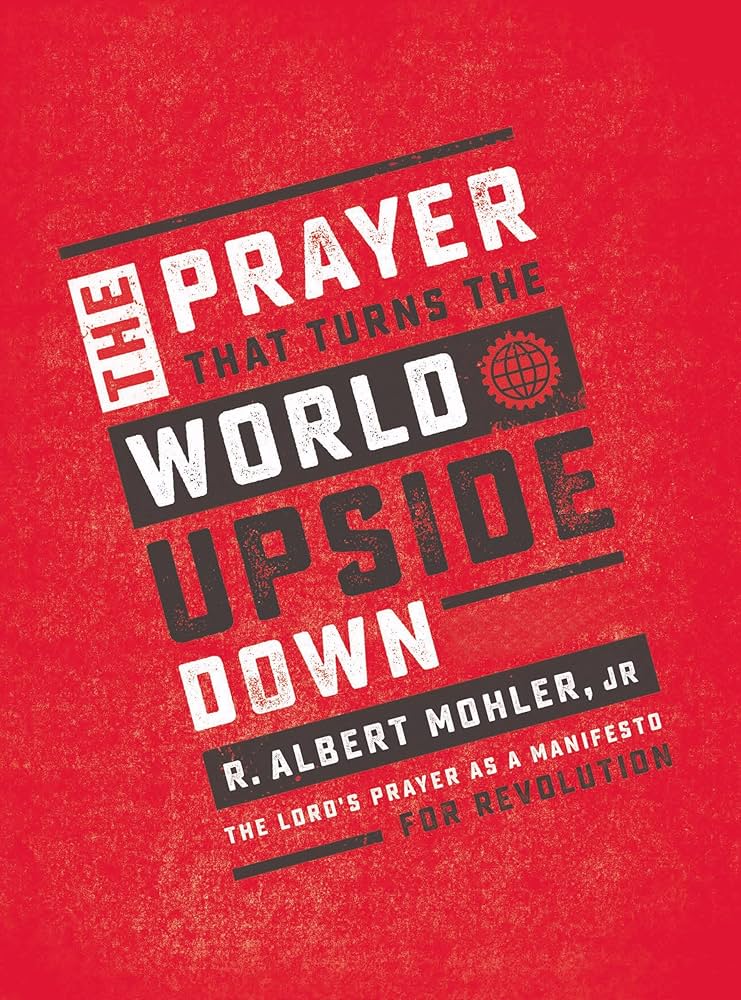
Jesus’ address emphasizes not only God’s immanence in calling him Father but also his transcendence by referring to him as the “Father in heaven.”
Our knowledge of God’s transcendence should shape our prayers by reminding us that prayer is a humble and reverent enterprise. This is why one of the most helpful things to do in prayer is pray the Scriptures. In this way, we can make sure that God’s words are many and that our words are comparatively few.
The Grace of Divine Disclosure
Before leaving the words “Our Father in heaven,” we should note one last important feature of this passage: we do not name God; He names Himself.
When Jesus appropriates Old Testament language to address God instead of opting for newer, more “creative” ways to address Him, He is reminding us that we must only speak about God as He has revealed Himself.
Let’s remember “Our Father in Heaven…” as we start our prayers with the worship and adoration that He is due.