
Click here to return to Blog Post Intro
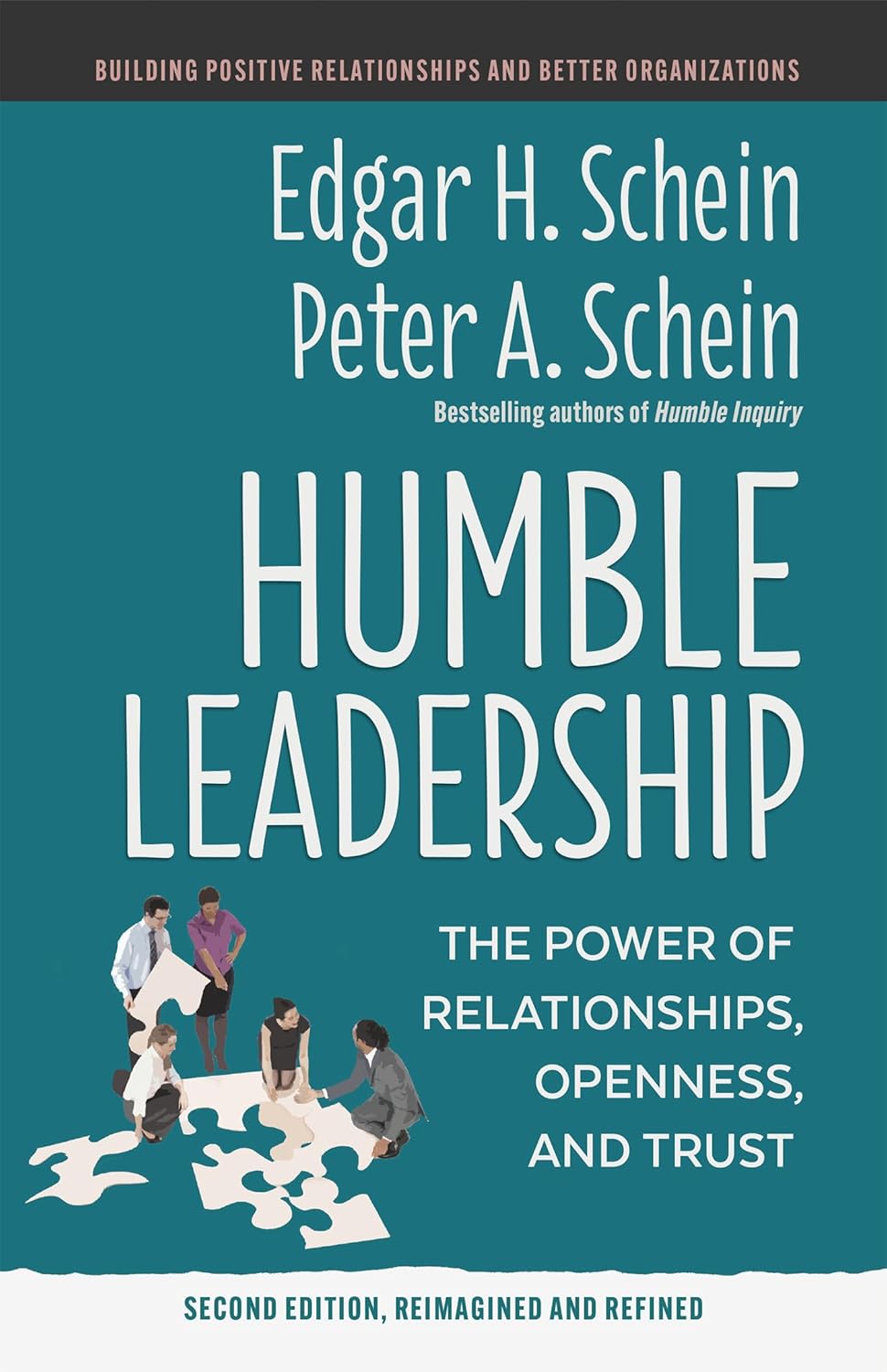
What Is the Essence of Humble Leadership?
A New Approach to Leadership
It is reasonable and prudent to expect even more volatility, uncertainty, complexity, and ambiguity (VUCA) in the economic, political, and, perhaps most of all, environmental crises that lie ahead. Schein and Schein write, “We cannot overstate the importance of adaptiveness and resilience. As we have noted in previous works, humility is not typically associated with leadership.”
Leadership Is the Creation and Implementation of Something New and Better
Consider Humble Leadership as a fundamental process that underlies and can complement various notions of leadership described as “servant leadership” or as “adaptive,” “boundary-spanning,” “learning,” “inclusive,” “transactional,” “transformative,” and so on. These descriptions of leadership emphasize different traits of leaders, while Humble Leadership emphasizes the practice of how any of these traits can help drive new and better actions.
Leadership—when defined as focusing a team on the pursuit of something new and better—is distinct from the concepts of efficient management or stewardship, both of which are oriented toward maximizing or optimizing the best of the present practice.
Leaders can miss vital process information by paying too much attention to technical fixes rather than looking and listening for social context signals that are outside of the scope of the technical fix. Humble Leadership does not mean diminished emphasis on technical efficiency. It does, however, suggest a re-balancing of intentions—moving beyond singular concern for “hitting the numbers”—particularly when colleagues and stakeholders are aware that other driving factors are at play that may not be captured in the metrics.
One rule of thumb is to consider allocating 20 to 25 percent of work effort away from managing metrics and toward collaborative information sharing focused on co-creating “new and better” using information shared across levels in an organization.
Humble Leadership based on open systems advocates looking for new dials, new workflows, new people, new tools and partners—whatever creative ideas may be needed to address both existing and unforeseen challenges.
Humility in Practice: Situational Humility
Situational humility is a developed skill characterized by the openness to see and understand all the elements of a situation by:
- accepting uncertainty, while remaining curious to find out what is really going on,
- being open, intentionally and mindfully, to what others may know or observe, and
- recognizing when unconscious biases can distort perceptions and trigger emotional responses.
The Role of Culture in Leadership
Culture can mean many different things. One helpful definition is simply “accumulated shared learning.” The culture of any small team, organization, or even a whole society can be thought of as the sum of what that group has learned and that it then shares with newer or younger members of the organization.
Both situational humility and an openness to co-discovery of what will be new and better, and especially how it might be implemented, require the leader to understand not only the culture that exists now but also how that culture might aid or hinder implementing what is deemed new and better.
Two important dimensions of culture in practice are technical culture (strategy, mission, design) and social culture (relationships and communication patterns).
Building More Personal Relationships
Leaders need to build personal relationships that will make others feel psychologically safe enough to share their information and insight, in order that they might (1) help refine and clarify what will be new and better and (2) help ensure that the team’s plans can be implemented.
The Four Basic Levels of Relationship
- Level Minus 1 (Negative relationships): Characterized by domination, coercion, and impersonal control based on unequal distribution of power (such as a guard and a prison inmate)
- Level 1 (Transactional relationships): Involving role- and rule-based interactions, as seen in service and retail jobs, and in most forms of “professional” helping relationships
- Level 2 (Whole-person relationships): Built on trust and personizing, as seen in friendships and in effective, collaborative teams
- Level 3 (Intimate relationships): Characterized by emotionally close connections, in which the participants share total mutual commitment (such as lovers or a married couple)
As Amy Edmondson pointed out in her influential work on “teaming,” learning together is one of the best ways employees and their managers can get to know each other, because in that context they can give each other direct feedback, including suggestions on how the work could be done better. This does not necessarily mean that they become friends, just that they know each other’s whole person in the context of getting the job done; they get to know accurately each other’s skill sets and those aspects of personality that bear on the tasks at hand.
Personizing takes intention and effort. Doing the work of evolving management norms from Level 1 to Level 2 is the defining task of Humble Leadership.
Sentiments Associated with Relationship Levels
- Level Minus 1: Antipathy
- Level 1 (Transactional): Apathy
- Level 2 (Personal): Empathy
- Level 3: Compassion
Examples of Humble Leadership in Different Contexts
Humble Leadership in Creating and Building Organizations
Founders of organizations who have Level 2 relationships with each other can create cultural norms that support high openness and high trust within the hierarchical organizations they develop. One way of accomplishing this environment is by not letting roles become rigid and by frequently rotating important leaders through key roles so that each person knows what is involved in the others’ jobs.
Generally speaking, in a new organization it is possible, if not imperative, to empower lower-level employees to make strategic and tactical decisions.
With the growth of separate divisions within the organization, empathy can get lost and situational humility can be replaced by biased thinking that leads to intergroup competition. The management of the potential intergroup fights then becomes one of the major realities that Humble Leadership must deal with.
Humble Leadership of founders make them open to experts, helpers, and observers—the “eyes and ears on the ground”—who provide vital insights during the decision-making process. This is the essence of Humble Leadership: a boss who acknowledges that they cannot see enough and know enough to create meaningful change without involving other team members and assimilating their insights.
Humble Leadership in Transforming Organizations
Hierarchy—a layering of formal ranks or status levels to ensure coordination—is a structural characteristic of organizational life, but what actually goes on between individuals from different levels is not automatically prescribed.
A growing number of stories drawn from recent conflicts emphasize teamwork, cooperation across hierarchical boundaries, and the importance of empowering troops to make their own on-the-ground decisions.
In Turn the Ship Around!, Captain L. David Marquet describes how the culture on his nuclear submarine was transformed from a demoralized, marginally effective, by-the-book Level 1 hierarchy to a high-morale, effective, proud Level 2 organization. The change was founded on converting an existing leader-follower system into a new leader-leader system.
In telling the story, Captain Marquet shows us how much of this transformation hinged on his situational humility and his developing Level 2 relationships with the key people below him. Marquet began building his relationship with his new crew by talking to people and asking a lot of questions.
Marquet wrote, “Like so many times, my not knowing the answer ahead of time helped me. Instead of a scripted meeting where I pretended to solicit ideas, we had an honest conversation.”
To reinforce this attitude of taking initiative, Marquet changed the strict system of superiors giving orders to inferiors, and he implemented the practice of having direct reports announce their own suggestion in the form of “Sir, I intend to . . . (change course, increase speed, etc.).” If the suggestion made sense, the senior officer would respond, “Very well.”
Marquet further mandated that hierarchical language such as “Request permission to,” “I would like to,” “What should I do about,” “Do you think we should,” and “Could we” be replaced by “I intend to,” “I plan to,” “I will,” and “We will.” This would train people to feel more empowered and specific in their intentions.
Captain Marquet’s transformation of his submarine was primarily social. He may also have made changes to the technical functions and flows, but it was clear to him at the outset that the social transformations would make the technical changes easier, and not necessarily vice-versa.
Lessons: Level 2 relationships can exist in a formal hierarchy
One key lesson is the importance of having all the top members of an organization fully understand the goals and functions of the organization. Systematic rotation through the various units can help solidify this value and build empathy toward each unit. With everyone working toward a collective goal, invested in all parts of the company, and engaged in Level 2 relationships, important strategic decisions can be made even when there is confrontational debate, since these conversations will be happening in an open, collaborative context.
Building relationships deliberately by having more and longer meetings with a more diverse membership, including outside consultants, was a necessary step toward getting members of the various silos to talk to each other and, more importantly, to listen to each other. Direct intervention, in the form of active facilitation, was required at times when communications broke down or people failed to listen to each other enough to get the full understanding of what others were saying. Establishing mutual empathy and an environment of psychological safety encouraged openness and trust across layers of hierarchy.
Group Dynamics in Humble Leadership
Renowned psychologist and pioneer in the field of social psychology, Curt Lewin’s research showed that teaching and learning about groups and interpersonal dynamics could indeed be greatly enhanced if the teacher, instead of “telling,” facilitated the students having real-time experiences and then analyzing them, with the teacher helping as a facilitator. This process of co-creating learning led to Lewin’s founding, in 1947, of the National Training Laboratories for Group Development, which became a foundational institution for advancing theories and practices related to group behavior.
It was there, in Bethel, Maine, that T-groups (training groups) were launched as the centerpiece of human relations labs on leadership and group dynamics. What is today known as organization development (OD) largely grew out of these early experiments with what came to be called “sensitivity training.” Participants and facilitators working together learned how systematic analysis of group process was needed to make sense of the events that occurred in and between groups within an organization.
In these studies, researchers noticed that organization development, the management of change, and leadership practices were heavily socio-technical in nature, with the socio element strongly evident in the conversations between participants, in the relationships they were building, and in the interactions between groups.
Culture and the Future of Humble Leadership
Culture Dynamics in Humble Leadership
The Structure of Culture Artifacts
- What is seen, heard, felt (physically)
- Espoused values
- What insiders say is important and valued
- Underlying assumptions
- Core historical and nonnegotiable beliefs
The Practice of Culture
- Technical strategy, mission, objectives, design
- Social communication and relationship norms, influence networks, social patterns
- Macro global/national/local relational trends, occupational norms, cohort norms, technology trends, enviro-socio-political movements
The critical distinction between structure and practice is that the latter is enacted and experienced every day, in real time. We see the practice of culture in how an organization approaches strategy, objectives, measures of performance, and so on.
Creating a climate that encourages people to speak up is of little value if the system does not have the capacity to hear and react appropriately to what is said. We associate that inability to hear and adapt with Level 1 transactional, role-based relationships.
Many managers, leaders, and theorists have highlighted the importance of transparency, while conceding that opening all the channels for all kinds of work-related and financial information is far easier said than done. It is also the reason why we insist on the concept of “openness” to highlight that what and how we communicate is not a passive process of making things visible but an active sharing, revealing, listening, understanding, and responding process.
The rise and fall of one organization revealed a pattern: conventional values favored operational efficiency and metric-based leadership more than collaborative effectiveness. The intention to be open and trusting was there, but the tie-breaking force, the slight headwind, was the quest for operational efficiency. The forces of technical culture and social culture are dynamic down to the level of individual actors, and creating change, doing something that is new and better, is rarely linear.
A challenge for Humble Leadership is specifying (using the suggested vocabulary) which facets of the technical culture are tailwinds to be harnessed and which are headwinds resisting what is new and better.
Which conventional values (i.e., espoused values and underlying assumptions) align or do not align with the intention to create something new and better? Which macro culture trends are tailwinds that can be exploited?
Movement toward Humble Leadership is culture change leadership, taken in continuous waves and feedback loops, and it accelerates in adaptive, flexible organizations characterized by psychological safety, openness, and trust—Level 2 relationships, up, down, and across adaptive and shape-shifting organizations.
Anticipating the Future of Humble Leadership
Culture scenario planning may sound like a difficult process: it is, in essence, trying to predict something vague and elusive. We can only offer science fiction writer William Gibson’s implied words of encouragement: “The future is already here—it’s just not evenly distributed.” The trends are out there, we just need to spend some time to see and hear them. Whether we use our term, meta culture, or want to call it future culture, we need to sharpen our situational humility so that we will be able to see that emerging cultural trends, though unevenly distributed, impact macro culture, social culture, and technical culture, and therefore need to be part of the Humble Leadership analytical frame.
Consider these themes humble leaders will be mindful of, and may be able to use as a tailwind, if they are following a course that is not inconsistent with stronger meta culture trends (headwinds):
1. Context over content
Humble Leadership will be more successful if it emphasize context and process and puts proportionately less focus on content and expertise.
In his book Thank You for Being Late, author Thomas Friedman suggests that our common experience of artificial intelligence is actually “IA,” or “intelligent assistance.” This is an important framing, as it reminds us that, generally, automation does not mean the end of jobs for humans, it just means different jobs and possibly improved jobs. Humble Leadership can build on this idea of intelligent assistance by enhancing the ability of humans to process how information applies to particular contexts and in relationship to complex tasks.
While AI may be very efficient at ferreting out the known unknowns, it is only with Level 2 relationships, in which we collectively muddle through uncertainty by sharing, sensing, and reflecting on each other’s reactions, that Humble Leadership can provide the resilience to deal with unknown unknowns.
2. Humble Leadership will have to cope with tribalism (culture wars) and build relationships unbound by unconscious biases.
The Humble Leadership challenge will be to leverage the intrinsically more tolerant attitudes evident in the younger generations into more effective, globally distributed teams in the coming years.
3. Humble Leadership must challenge individual abuse of power.
As business theorist Jeffrey Pfeffer notes in Power, power abusers often succeed in the short term; and as organizational psychologist Adam Grant wrote in Give and Take, “takers” (selfish power abusers) sometimes succeed in the short term because they believe they are playing in a zero-sum game, where one person’s gain necessarily comes at another’s loss.
As organizational psychologist Robert Sutton suggests, “Bad behavior is five times more powerful than good behavior.”
Humble Leadership emphasizes tolerance, respect, and the value of personal connections between whole persons, and thus it represents a superior way forward, as compared to the indifferent if not abusive power dynamics common in static and transactional organizational relationships.
4. Humble Leadership can help groups become more agile, adaptive, and collaborative in ways that help to tailor leadership to the needs of employees, stakeholders, and customers.
5. Humble Leadership will need to perpetually reconsider how to organize relationships and workgroups in a global mobile world.
6. Humble Leadership will involve being both physically present and virtually present as organizations become more globally distributed.
One of the key skills of the humble leader is rapid personization—the ability to quickly establish open communication at those times when groups are co-located (which in turn removes some of the pressure to hold more-frequent in-person gatherings, especially when telepresence is more efficient).
Humble Leadership Messages: An Allegory
In innovation-driven industries where VUCA (volatility, uncertainty, complexity, and ambiguity) is embraced, as a company matures, isolated, heroic leaders will ultimately suffer if they fail to gather complete information before making decisions.
An individualistic, competitive, destiny-is-in-my-hands-alone mindset limits a leader’s ability to handle uncertainty and volatility, since no individual will be able to process the huge volume of data or assimilate the dynamic inputs to effective strategy.
All organizations face ebbs and flows of growth and of market acceptance, and cycles of budget surplus and deficit.
Leaders shifting resources dynamically, as a body shifts blood to where it is needed, is one key to a system’s success. Humble leaders are there to “read the room”—of both the situation and the people involved—and then use that information to set the company’s direction toward something new and better.
Experiential Learning for Humble Leaders
Adopting the Humble Leadership Attitude
Humble Leadership will often identify that the most important “new and better” will require evolving some of the existing cultural conventions into new kinds of intentional socio-technical responses and adaptations.
First, use focused reflecting to broaden perspective on the different aspects of the cultures of management, administration, and leadership.
Second, analyze the nature and depth of your current work relationships and then decide where the depth of those relationships might need to be changed in order for you to become more effective as a humble leader.
Behaviors and Group Skills for Humble Leadership
The future of not only working effectively but also enjoying work will hinge on recognizing the limitations of role-based transactional relationships and emphasizing the power of Level 2 relationships to build the openness and trust the world of work will increasingly require.
Eight Different Ways Groups Make Decisions
Based on National Training Labs workshops initially conducted in 1956:
- The plop – Something is suggested and no one responds, so the group does nothing. The suggestion has “plopped.”
- Self-authorization – One person makes a suggestion, no one objects, and the group goes on and does it.
- Minority rule – One person makes a suggestion, one or two other persons agree, no one objects, and the group goes on and does it.
- Discuss and vote – One or more persons suggest a period of discussion prior to taking a vote on a given suggestion. The group sets a time limit for discussion, then votes and goes with the majority.
- Voting – Voting can be done in a variety of ways, e.g., by a show of hands or by secret ballot.
- Polling – All members are asked to tell the group where they stand on the issue and to explain their position. The group proceeds only when everyone has spoken, whether through an ordered process or just open dialogue.
- Consensus testing – A possible decision is stated and the members are asked: “If we decide this, is there anyone who could not go along with it or would not support implementing it?” If one or more members object, each objector will explain their reasons, and then the group will test a new possible decision in the same way. When everyone has agreed that they could support and implement the decision even if they personally continue to disagree, then consensus has been reached. There is no return to voting.
- Unanimous agreement – This can and does occur when discussion or polling reveals at the outset that everyone agrees to whatever has been proposed, and consensus testing has confirmed the unanimity.
Unforeseen consequences, or “traps” to avoid
Silence does not necessarily imply agreement; sometimes it signifies only an unwillingness to object or to reveal important and relevant information (especially in decision-making methods 1 to 4). In some cases, silence may reflect unanimous disagreement, which can then lead to decisions no one wanted.
Status differences can undermine the openness of more junior members and thus may prevent them from sharing relevant information. Voting often creates a minority group that may then undermine implementation once a decision has been made.
Open voting creates imitation and promotes groupthink and, therefore, a false sense of consensus.
Each of the eight decision-making methods should be considered for every decision, and the group should agree at the beginning of the process which method they will use.
Summary
As Schein and Schein have said many times, “Leadership is a group sport.” Humble leaders learn that minding the behavior of groups, and improving the behavior of groups, is directly related to building at least Level 2 relationships and recognizing that the group knows more than any one individual. Humble leaders recognize the importance of “reading the room,” having a sense of how groups behave, and knowing how to intervene with the right questions (content and process) when group behavior deteriorates.
In the end, the odds of superior outcomes are greater in groups that find synergy in open and trusting relationships.