
Click here to return to Blog Post Intro
Thesis: What is Humility and Why Does It Matter?
Dickson’s thesis is simple: The most influential and inspiring people are often marked by humility.
In Jim Collins’ Good to Great, one of the key factors in all of the good-to-great companies during the growth phase was what Collins described as Level 5 Leadership—that is, leadership marked by two characteristics: steely determination and an attitude of humility.
Collins records the puzzlement of his research team at the consistency of this finding, “Compared to high-profile leaders with big personalities who make headlines and become celebrities, the good-to-great leaders seem to have come from Mars. Self-effacing, quiet, reserved even shy—these leaders are a paradoxical blend of personal humility and professional will. They are more like Lincoln and Socrates that Patton or Caesar.”
Collins’s 2009 book How the Mighty Fall bears out the flipside—when successful companies become arrogant, it often spells their downfall.
What Is Humility?
Humility does not mean humiliation, even though both words are offspring of a single Latin parent (humilitas). Nor does it mean being a doormat for others, having low self-esteem or curbing your strengths and achievements.
Muhammad Ali was wrong when he once quipped, “At home I’m a nice guy, but I don’t want the world to know. Humble people, I’ve found, don’t get very far.”
It should be entirely possible for Christians to reject Islamic doctrine as invalid and untrue—to maintain theological conviction, in other words—without diminishing their capacity to honor Muslims as fellow members of the human family. Likewise, the political Right should be able to disagree with the Left, and vice versa, without descending into name-calling, backbiting, and worse.
The peculiar Western meaning of “humility” derives from the usage of the Hebrew-speaking Jews, Latin-speaking Romans and the Greeks, in particular Greek-speaking Christians of the first century. In all three languages, the word used to describe humility means “low,” as in low to the ground: the Hebrew anawa, the Greek tapeinos, and the already-familiar Latin humilitas. Used negatively, these terms mean to be put low, that is, “to be humiliated.” Positively, they mean to lower yourself or “to be humble.”
Humility is the noble choice to forgo your status, deploy your resources or use your influence for the good of others before yourself. More simply, you could say the humble person is marked by a willingness to hold power in service of others.
There are three key thoughts in this definition:
- Humility presupposes your dignity. It is impossible to be humble in the real sense without a heathy sense of your own worth and abilities. Mark Strom, a fellow historian and proper leadership analyst, puts it well, “Wise leaders hold nobility with humility… Look beyond balance and embrace the paradox of strength in weakness to find your true weight as a leader.”
- Humility is willing. It is a choice. Otherwise, it is humiliation.
- Humility is social. It is not a private act of self-depreciation—banishing food thoughts, refusing to talk about your achievements and so on. I would call this simple “modesty.” But humility is about redirecting your powers, whether physical, intellectual, financial, or structural, for the sake of others.
Leadership: What It Is and How Humility Fits In
Leadership is the art of inspiring others in a team to contribute their best toward a goal.
Good leaders tend not to rely on structural authority but instead have a knack of winning people over to their vision of things.
In the Harvard Business Review on Leadership, a compendium of scholarly reflections on the topic, virtually every chapter stresses the role of communication. Unless a leader can convey a vision and convince team members of its worth, leadership is just hard work.
In his 1989 classic The Seven Habits of Highly Effective People, Steven R. Covey recalls two hundred years of American writing on leadership and achievement. Almost all of the relevant literature of the first 150 years (from 1776 to 1926) emphasized the importance of example or character. It “focused on what could be called the Character Ethic as the foundation of success—things like integrity, humility, fidelity, temperance, courage, justice, patience, industry, simplicity, modesty, and the Golden Rule.”
This Character Ethic, Covey says, “taught that there are basic principles of effective living, and that people can only experience true success and enduring happiness as they learn and integrate these principles into their basic character.”
The Heart of Leadership
Leaders have four tools—ability, authority, persuasion, and example. Authority is the least useful tool of leadership. Ability, of course, remains necessary; leaders rarely emerge from the pack without some talent.
Persuasion and example (in combination) are the heart of leadership. Effective leaders are unlikely to lead well without significant doses of persuasion and example.
Leadership is fundamentally relational: effective communication and building trust are key aspects of all relationships.
The “human side of management,” as Thomas Teal of Boston Consulting Group calls it, is all-pervasive but sometimes overlooked.
Here’s a simple syllogism:
- Persuasion and example are keys to effective leadership.
- Humility enhances persuasiveness, partly because it is a compelling character trait in leaders.
- Therefore, humility is important for leadership.
Common Sense: The Logic of Humility
Humility is common sense.
There is a danger in knowing a lot. As the ancient Greek proverb warns, “Knowledge puffs up, but love builds up.”
None of us is an expert in everything, so a little humility is common sense. Humbly acknowledging limitations are not signs of weakness. They demonstrate realism and are therefore strengths.
Thomas Gilovich, professor of psychology at Cornell University, conducted a survey of one million high school seniors and found that 70 percent of them thought they were “above average in leadership ability.” Only 2 percent thought they were “below average.” In terms of “ability to get along with others,” all students thought they were “above average,” 60 percent thought they were in the “top 10 percent” and 25 percent thought they were “in the top 1 percent.”
It might be tempting for us adults to explain this as arrogance of youth, but the Gilovich research also found that 94 percent of college professors think they, too, are doing a “better-than-average job.”
Consider this very practical point. Whether the universe was majestically designed by Someone or is the result of a glorious, imponderable Coincidence, believer and atheist alike can agree that we are infinitesimally small in this vast universe and infinitely blessed or lucky to be here. We can all stand in awe of the amazing fact that we find ourselves living in a universe that not only operates according to elegant “laws,” but has somehow, through those laws, produced a world of sentient beings who can now comprehend those laws.
Whatever you call it—intention or luck—the nature of the universe and the fact that our minds understand that nature are uncanny in the extreme and should result in something close to humility.
Aesthetics: How the Humble are Beautiful
Sir Isaac Newton, the Father of Science, was a famously humble man, acknowledging that he had been aided by the work of other men and that science was a collaborative process.
In a letter to Robert Hooke in 1675 Newton wrote:
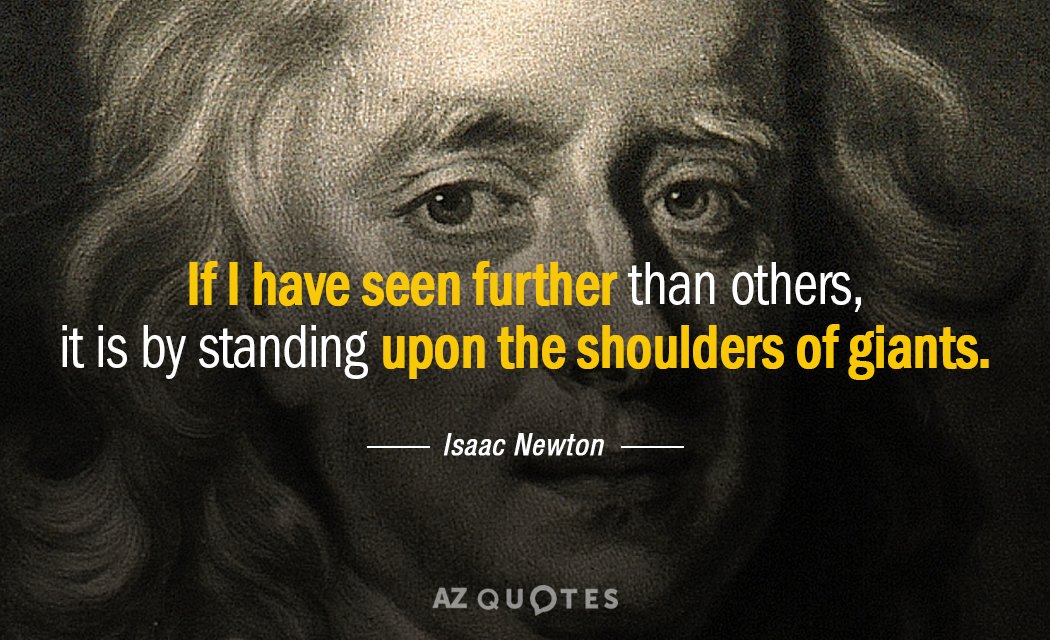
On another occasion he described himself as “a boy playing on the seashore,” searching for interesting shells and pebbles “while the great ocean of truth lay all undiscovered before me.” Here was a man willing to admit that what he did not know far exceeded what he did.
When humility is sincere—when words are matched by behavior—it is indeed beautiful. The point is not to advise all of us to “put on” humility in order to impress our friends and colleagues. That would be a rather perverse inversion of the concept. Humility is not an ornament to be worn; it is an ideal that will transform.
Philotimia: Why the Ancient World Didn’t Like Humility
The word humilitas and its Greek equivalent tapeinos usually carried the negative meaning of “being put low.”
Aristotle once said, “People are also calm toward those who humble themselves toward them and do not contradict them; for they seem to admit being inferiors, and inferiors are afraid, and no one who is afraid belittles. That anger ceases toward those who humble themselves is evident even in the case of dogs, who do not bite those sitting down.”
Humility before an equal or a lesser was morally suspect. It upset the assumed equation: merit demanded honor, thus honor was the proof of merit. Avoiding honor implied a diminishment of merit. It was shameful.
Cruciform: How a Jew from Nazareth Redefined Greatness
How did the culture move from being one that prized public honor and despised lowering yourself before an equal (let alone a lesser) to one that despises self-aggrandizement and prizes lowering yourself for others. Whence humility?
Let’s consider the historical context and impact that Jesus of Nazareth had on the Western notion of humility.
From Jesus’ sayings, we get humble-sounding statements like, “Blessed are the poor in spirit, for theirs is the kingdom of heaven,” “Blessed are the meek, for they will inherit the earth,” “Love your enemies,” and the famous “If someone strikes you on the right cheek, turn to him the other also.”
But only once do you get the explicit statement, “Take my yoke upon you and learn from me, for I am gentle and humble in heart, and you will find rest for your souls. For my yoke is easy and my burden is light.”
On another occasion, Jesus seems to have delighted in turning upside-down ancient notions of greatness and servitude: “Whoever wants to be great among you must be your servant, and whoever wants to be first must be slave of all. For even the Son of Man [his favorite way of referring to himself] did not come to be served, but to serve, and to give his life as a ransom for many.”
This is not about theology. We are simply tracking where the modern notion of humility as a positive ethical virtual came from. And there is little doubt that the Jew Jesus had something to do with it.
The first datable reference to this innovation in ethical reasoning comes from a letter written by the apostle Paul to the Christians in the Roman colony of Philippi in northern Greece. The letter is dated to about the year 60.
Paul speaks of Jesus’ humilitas in addressing the church in Philippi, “Do nothing out of selfish ambition or vain conceit, but in humility consider others better than yourselves. Each of you should look not only to your own interests, but also to the interests of others. Your attitude should be the same as that of Christ Jesus.”
Within decades of Paul’s letter to the Philippians Christians were regularly emphasizing “humility” as a central characteristic of the ethical life.
A letter from a Roman church official named Clement (AD 96) to the Christians in Corinth says, “You are humble-minded, not boastful, yielding rather than domineering, happily giving rather than receiving.” By now humility is firmly established as a virtue within Christian circles.
A Christian Monopoly on Humility?
The point is not that Christians alone can be humble; rather, as a plain historical statement, humility came to be valued in Western culture as a consequence of Christianity’s dismantling of the all-pervasive honor-shame paradigm of the ancient world. Today, it doesn’t matter what your religious views are—Christian, atheist, Jedi Knight—if you were raised in the West, you are likely to think that honor-seeking is morally questionable and lowering yourself for the good of others is ethically beautiful.
Put another way, while we certainly don’t need to follow Christ to appreciate humility or to be humble, it is unlikely that any of us would aspire to this virtue were it not for the historical impact of his crucifixion on art, literature, ethics, law and philosophy. Our culture remains cruciform long after it stopped being Christian.
Growth: Why Humility Generates Abilities
John MacMurray, former professor of moral philosophy at the University of Edinburgh and one of the twentieth-century’s leading social thinkers wrote a book titled The Clue to History where he showed fascination with Jesus’ statement, “Blessed are the meek, for they shall inherit the earth”: “Our tendency is to treat this as an assertion that humility is one of the supreme virtues … A sermon on this text is almost inevitably a sermon on the virtue of humility … Yet it is quite obvious that Jesus gave as his reason for believing in humility that it was an essential part of the means to ultimate material success. Nothing could be less characteristic of the mind of Jesus than the notion that virtue is its own reward.”
The Slow Pace of Pride
Perhaps the most obvious outcome of being humble is that you will learn, grow, and thrive in a way the proud have no hope of doing.
“Arrogant managers,” writes John Kotter of the Harvard Business School, “can overevaluate their current performance and competitive position, listen poorly, and learn slowly.”
G.K. Chesterton wrote Orthodoxy. In his battle against the early twentieth-century rationalism and self-reliance, which he believed was sapping the energy out of religion, the arts and life itself, Chesterton argued that human pride is in fact the engine of mediocrity. It fools us into believing that we have “arrived,” that we are complete, that there is little else to learn. Humility, by contrast, he said, reminds us that we are small and incomplete and so urges us on toward the heights of artistic, scientific, and societal endeavors, “It is impossible without humility to enjoy anything.”
Humbling places are often the places of growth. This is not allowing others to walk all over you. That would be humiliation. Instead, it is opening yourself up to the vulnerability of being wrong, receiving correction and asking others how they think you could do better. In this sense the low place is the high place. It is where you develop.
Undefended Leadership
In his book Leading Change John Kotter explains how he tracked the careers of 115 of his former students from Harvard Business School. He tells the story of Marcel, whom Kotter never really expected to show great leadership potential but who emerged as head of his own company and became very wealthy.
After discussion and reflection he ended up attributing Marcel’s success to the way he gave humble attention to the difficulties and mistakes he endured through the years. “He reflected on good times and bad,” writes Kotter, “and tried to learn from both. Confronting his mistakes, he minimized the arrogant attitudes that often accompany success. With a relatively humble view of himself, he watched more closely and listened more carefully than did most others.” Humility generates learning and growth.
Humility not only signals security; it probably fosters it too. Healthy self-worth is rooted far more in service that achievement, far more in giving than taking.
Group arrogance (like personal arrogance) is off-putting and stultifying, a point driven home forcefully by Jim Collins’ follow-up to Good to Great, his 2009 book How the Mighty Fall. By contrast, humility is both attractive to the watching public and, importantly, the only ethos that will foster an organization’s learning and development. Stephen R. Covey, the author of the bestselling The Seven Habits of Highly Effective People, writes in a more recent book, “Humility truly is the mother of all virtues. It makes us a vessel, a vehicle, an agent instead of ‘the source’ or the principal. It unleashes all other learning, all growth and process. With the humility that comes from being principle-centered, we’re empowered to learn from the past, have hope for the future, and act with confidence in the present.”
The humble place is the place of growth.
Persuasion: How Character Determines Influence
The point for leaders is simple: the two key leadership tools are closely related. Persuasion is hugely dependent on example. The kind of life we exhibit in daily speech, decisions and interactions—the kind of character we convey—is almost, to use Aristotle’s words, the “controlling factor in persuasion.”
Inspiration: How Humility Lifts Those around Us
Achievement and status alone are not where true inspiration is found. It is when our heroes are humble that they most inspire.
In recent years business leaders emphasized the same thing: humility in leadership seems to have marked a positive influence on individuals and organizations.
Jim Collins’ level 4 leadership is what we normally associate with big time executives. This “effective leader,” Collins says, “catalyzes commitment to and vigorous pursuit of a clear and compelling vision stimulating higher performance standards.”
But all eleven companies in the study that managed to outperform the market by three times over a fifteen-year period—the good-to-great companies—were led by a different individual (and culture) entirely. The Level 5 Executive “builds enduring greatness through a paradoxical blend of personal humility and professional will.” In interview after interview, Collins says, the humble character of these steely-willed leaders was clear, not just in their interactions with Collins’s research team but, perhaps more importantly, in the research team’s discussions with employees. Independently of each other and in different ways, workers close to the executive would report how he was unassuming or always courteous or asked questions of others or put the firm’s interests above their own. Humility, in other words.
The Aspirational Effect
Why does humility in the leader inspire others to perform their best for the company?
- Humility is persuasive. People find themselves trusting the decisions and arguments of someone who puts others before themselves.
- Humility in the leader orients everyone in the team toward achieving the organization’s key objectives. When employees suspect the leader is in it for himself, they lose motivation.
- The humble leader gives the real impression that she is a “normal person.” The executive who chats to employees, seeks their advice, freely pays compliments, and does what she can to ensure workers’ needs are cared for—as well as kicking spectacular corporate goals—is far more likely to see “real” and become an object of emulation, not just admiration. This aspirational effect is a key to humility’s power to inspire.
- Humility fosters loyalty toward the leader. It minimizes unhelpful internal criticism, maximizes staff motivation and resilience and leads to lower staff turnover rates.
Brigadier Jim Wallace started as captain in the elite Special Air Service (SAS). He moved up through the ranks until he was commander of the SAS and then commander of all Special Forces in Australia. He said, “Leading and inspiring others to great heights come through humility.” The inspiring leader must control his ego and throw his energies into “maximizing others’ potential” and “ensuring they get the credit.”
Harmony: Why Humility Is Better Than “Tolerance”
Tolerance means something like agreeing that all viewpoints are equally true or valid. In an attempt to establish this concept on the world stage, the 48th UN General Assembly declared 1995 would be the “International Year for Tolerance.” This definition seeks to establish harmony between people of differing views by asking them to soften convictions.
With due respect to the careful thought that went into the International Year for Tolerance, we can do better than to ask people of strong conviction to relax their claims to knowledge and truth.
How can society as a whole be honest about its moral and religious disagreements and work to mend the dysfunctions?
Humility applied to convictions does not mean believing things any less; it means treating those who hold contrary beliefs with respect and friendship.
The great twentieth-century British literary critic and social commentator G.K. Chesterton made this point, “Modesty has settled upon the organ of conviction; where it was never meant to be. A man was meant to be doubtful about himself but undoubting about the truth. This has been exactly reversed … We are on the road to producing a race of men too mentally modest to believe in the multiplication table.”
Dickson reflects, “When I talk about humility applied to conviction, I do not mean believing anything less. I am advocating that we hold our convictions firmly but do so with a soft heart toward those who hold contrary convictions.”
We have forgotten how to flex two mental muscles at the same time: the muscle of moral conviction and the muscle of compassion to all regardless of their morality.
G.K. Chesterton famously quipped, “An open mind is like an open mouth: its purpose is to bite on something nourishing. Otherwise, it becomes like a sewer, accepting everything, rejecting nothing.”
We learn to respect and care even for those with whom we profoundly disagree. We maintain our convictions but choose never to allow them to become justification for thinking ourselves better than those with contrary convictions. We move beyond mere tolerance to true humility, the key to harmony at the social level.
Steps: How It’s Possible to Become (More) Humble
How can we cultivate humility?
1. We are shaped by what we love.
Noticing the inherent beauty of a thing is the first step in organizing our thoughts and actions around it. Loving humility; admiring it and longing for it are what kick-starts the process of being transformed by it.
2. Reflect on the lives of the humble.
If we are shaped by what we admire, finding admirable examples and studying them will go a long way toward forming humility in us. In Luke 6, the life and teachings of the man from Nazareth continue to have an incalculable impact on Western culture even where explicit Christian faith has waned. More important than books, of course, are the people in our lives who exhibit humility. Reflect on them.
3. Conduct thought experiments to enhance humility.
A thought experiment is an imaginative exercise designed to open up the possibilities of a dilemma and so bring clarity. Ethicists use thought experiments to imagine solutions to ethical dilemmas and to discern new ethical problems that might have been missed by simple rational analysis. One may have a very black-and-white view of abortion, for example, until you project yourself into the situation of a twelve-year-old rape victim. The process of putting yourself in another’s situation raises new information and provides a clearer view of the ethical factors involved. It may not change your view, but it will give you greater depth and perspective.
4. Act humbly.
Develop the humility muscle by exercising it, even if it doesn’t feel up to the task. Obviously, thoughts powerfully affect actions. At the same time, actions influence thoughts. Many people swear by the rule: force yourself to smile and soon you will feel happier. I can certainly testify to the fact that forcing myself to act humbly in some situations has made it easier and more natural for me to do so in others.
5. Invite criticism.
Invite it from friends and colleagues. “I am constantly surprised at the frequency with which chief executives feel threatened by open challenges to their ideas,” writes Professor Abraham Zaleznik in the Harvard Business Review of Leadership, “as though the source of their authority, rather than their specific ideas, was at issue.” Within your team—whether military, sporting, corporate, church, or whatever—establish a culture of thoughtful critique. I am not advancing a horizontal approach to leadership. I firmly believe that lines of responsibility and authority ought to be respected in healthy organizations. I am simply pointing out that allowing constructive criticism and encouraging it at the team level is one powerful way to foster a little humility.
6. Forget about being humble.
C.S. Lewis, the famous Oxford don and author of the Chronicles of Narnia, said this about the truly humble person, “Do not imagine that if you meet a really humble man he will be what most people call ‘humble’ nowadays … Probably all you will think about him is that he seemed a cheerful, intelligent chap who took real interest in what you said to him … He will not be thinking about humility: he will not be thinking about himself at all.” Lewis ends his discussion of humility with a typical provocative and sage piece of advice about “acquiring” the virtue, “If anyone would like to acquire humility, I can, I think, tell him the first step. The first step is to realize that one is proud. And a biggish step, too. At least, nothing whatever can be done before it. If you think you are not conceited, it means you are very conceited indeed.”
Dickson concludes his book with this observation, “The very first step in the pursuit of humility is to recognize that I am not humble. This is excellent news—it means I must be on my way.”