



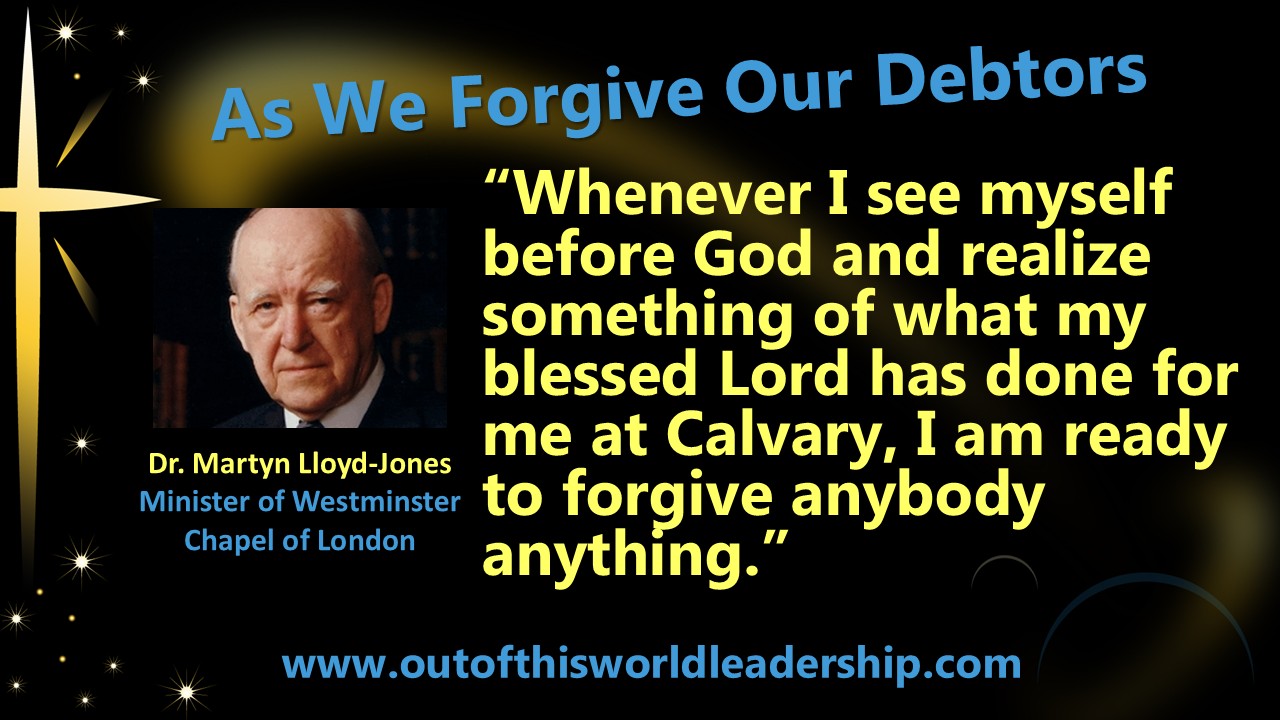
In all of our Lord’s Prayer, by far the most difficult phrase is, “As we forgive our debtors.” We readily ask God for our daily bread, for His kingdom to come, and for His will to be done.
We even ask Him to forgive our sins, but when we are asked to extend that same forgiveness to someone who has hurt, disappointed, betrayed, or wronged us, the words suddenly become much more personal. Forgiveness challenges our natural desire for justice and our tendency to believe that holding on to the offense somehow protects us or makes the other person accountable.
It is not easy for us either to understand or to apply in a practical way “as we forgive our debtors” to our daily living, yet Jesus makes forgiveness an essential part of following Him.
Forgiving someone does not mean pretending the offense never happened, minimizing the pain, or saying that what was done was acceptable. Nor does it always mean restoring the relationship to the way it was before. Rather, forgiveness is a decision to release our right to repay the person for the wrong and to entrust justice to God. It is choosing not to allow someone else’s offense to continue controlling our hearts.
Forgiveness, therefore, is less about what the other person deserves and more about what God is doing in us. And perhaps that is why this phrase in the Lord’s Prayer is so challenging. Every time we pray it, we are reminded that we are both people in need of forgiveness and people called to extend it.
Click here for more about The Lord’s Prayer from W. Phillip Keller